Dr. Renee Haberl Brings Patient Safety Lessons to SCU and Arizona Board Service
The Arizona chiropractic program coordinator connects clinical judgment and professional accountability to preparing future doctors.
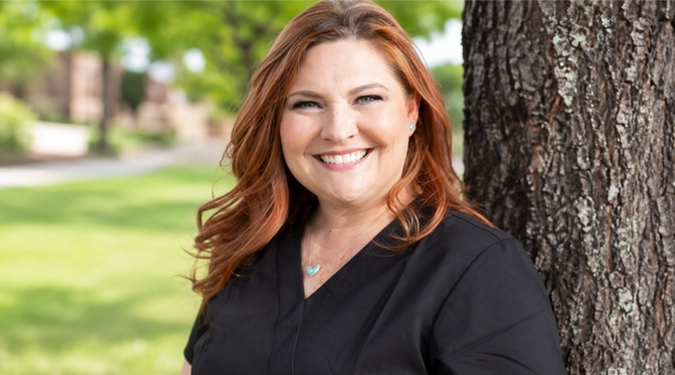
For Dr. Renee Haberl, preparing future chiropractors includes teaching them when a patient needs care beyond what they can provide. In classroom discussions at Southern California University of Health Sciences (SCU), she asks students to recognize warning signs, explain their decisions, and consider how they would communicate concerns to a patient.
That focus on patient safety also informs her new role as a professional member of the Arizona Board of Chiropractic Examiners. Appointed by Arizona Governor Katie Hobbs, Dr. Haberl began her term on September 10, 2026, and will serve through July 1, 2031.
Dr. Haberl is program coordinator for SCU’s Arizona Doctor of Chiropractic program, where she teaches Spinal Palpation, Examination Skills, and Interprofessional Education. She will also teach Public Health beginning in spring 2027.
Protecting Patients Through Professional Accountability
The Arizona Board of Chiropractic Examiners oversees professional, ethical, and safety standards for chiropractors. Dr. Haberl’s responsibilities include reviewing licensing matters, addressing patient complaints, and making decisions that hold practitioners accountable.
“I feel a personal responsibility to both the patients who place their trust in us and the future doctors entering our profession,” Dr. Haberl said. “I bring experience from both the treatment room and the classroom, along with an understanding of the challenges chiropractors face.”
Her appointment builds on years of service with the Arizona Association of Chiropractic, including a term as president from 2010 to 2014. She also received Chiropractor of the Year recognition in 2012, 2013, 2014, and 2020.
Teaching Students When to Look Beyond the Initial Complaint
In Dr. Haberl’s classroom, students regularly encounter clinical scenarios that challenge them to look beyond a patient’s initial complaint. In one classroom exercise, students work through a clinical scenario that initially appears to involve a routine complaint about muscles or joints. As more information emerges, warning signs suggest something more serious. Dr. Haberl asks students what they would do, why, and how they would explain their concerns to the patient. The exercise helps students recognize their limitations and decide when a patient needs other care. It also gives them a chance to explain their reasoning before making those decisions in practice.
“I want them to leave my classroom understanding that doing the right thing for a patient sometimes means being the doctor who recognizes they need care beyond what we can provide,” Dr. Haberl said.
For Dr. Haberl, developing this kind of judgment is an important part of helping students transition from the classroom to clinical practice. While students may initially focus on finding the correct answer to an exam question, practicing clinicians must make decisions that directly affect another person’s health. She creates opportunities for students to think critically, explain their reasoning, question assumptions, and learn from mistakes in a supportive environment.
“My goal isn’t just to teach them what to think, but to help them develop the skills to think independently,” she said.
Some of her most rewarding teaching moments come when students notice something doesn’t fit a clinical scenario and question it rather than rush to an answer. For Dr. Haberl, that willingness to pause reflects the judgment she wants future doctors to develop.
Dr. Haberl believes her service on the Arizona Board of Chiropractic Examiners will bring valuable new perspectives to her teaching, particularly in the areas of ethics, patient safety, and professional accountability. She also hopes her appointment will encourage students to recognize that professional leadership can take many forms, from providing excellent patient care to mentoring colleagues and volunteering within their communities. “The advice I would give students is to never wait for a title or position to become a leader,” Dr. Haberl said.
Related Posts