How Diagnostic Ultrasound Is Strengthening Tactical Sports Medicine Training at SCU
Dr. Michael Fanning’s specialized expertise is helping SCU residents develop diagnostic ultrasound skills that support clinical decisions, patient education, and coordinated musculoskeletal care.
When a firefighter recently visited the Tactical Sports Medicine Clinic at Southern California University of Health Sciences, the patient reported popping and clicking near the sternoclavicular joint whenever moving their shoulder. The symptoms began after an upper-body injury sustained during an emergency response, raising concerns about damage to the joint connecting the collarbone to the chest.
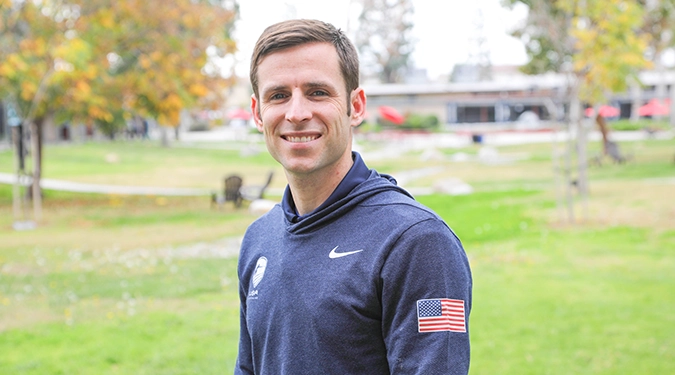
Using musculoskeletal ultrasound, Dr. Michael Fanning, Associate Professor and Tactical Sports Medicine Lead at SCU, examined the joint in real time. The images revealed findings consistent with a sprain and joint gapping, indicating that the injury required further evaluation. The patient was referred to an orthopedic surgeon and scheduled for a CT scan.
While the ultrasound examination did not replace advanced imaging or specialist care, it provided valuable information during the initial visit, helping inform the patient’s next stage of care.
The case reflects the type of clinical care that SCU Tactical Sports Medicine residents can observe while learning from Dr. Fanning, the program’s first Registered in Musculoskeletal Sonography (RMSK)- certified provider.
Bringing Advanced Ultrasound Expertise to SCU
Dr. Fanning pursued the specialized RMSK credential to expand the diagnostic capabilities available within SCU’s Tactical Sports Medicine clinic.
The credential recognizes physicians and advanced care professionals who demonstrate competency in performing musculoskeletal ultrasound examinations and interpreting anatomy and pathology. Earning it required approximately 18 months of preparation, including seminars, anatomy and ultrasound physics coursework, hands-on clinical training, and completion of 150 documented ultrasound examinations.
“Then, practice, practice, practice,” Dr. Fanning said. “I would practice ultrasound on as many patients as I could.”
That experience helped him understand not only how to produce and interpret an image, but also when ultrasound can contribute useful information and when a different diagnostic approach is needed.
A Clinical “Force Multiplier”
For clinicians treating injuries involving muscles, tendons, ligaments, joints, and other soft tissues, musculoskeletal ultrasound offers the ability to visualize structures in real time while patients move. Combined with a patient’s history and physical examination, those images can help confirm a diagnosis, guide treatment decisions, or identify when additional imaging or specialist referral is needed.
“We specialize in musculoskeletal injuries,” Dr. Fanning said. “We should use any and all tools needed to get the most accurate diagnosis, which helps dictate care.”
Dr. Fanning describes musculoskeletal ultrasound as a clinical “force multiplier” because it can expand the information available during an examination.
“We can figure out a diagnosis in office and come up with a game plan, rather than treat blindly or send out for an MRI, which can take a few weeks,” Dr. Fanning said.
The technology can also make the evaluation more understandable to patients. Clinicians can show them images of the affected area, explain what they are seeing, and discuss why a particular treatment plan, test, or referral may be appropriate. Images and written reports can then support communication with other members of the healthcare team.
By combining assessment, patient communication, and coordinated care, this approach reflects SCU’s Whole Health model. Ultrasound becomes one part of a broader process that considers the patient’s condition, occupational demands, recovery needs, and access to appropriate services.
Supporting Resident Development at SCU
Dr. Fanning’s expertise is creating professional development opportunities within SCU’s Tactical Sports Medicine program. Currently, one resident is pursuing RMSK certification, with SCU covering eligible training costs and providing dedicated time during the workweek for study and skill development. Two SCU doctors are also preparing for the credential independently.
Residents in the program study anatomy, pathology, evaluation methods, ultrasound physics, scanning techniques, and clinical application while working alongside Dr. Fanning in the clinic. The program also brings ultrasound educators to campus for additional instruction and hands-on training.
This robust support is important because ultrasound competency develops through consistent practice. Learners must become comfortable locating anatomical structures, producing useful images, recognizing possible pathology, and interpreting those findings within the larger clinical picture.
“Students who are interested typically like the real-time visualization of pathology,” Dr. Fanning said.
More importantly, residents learn how ultrasound fits within the real-world clinical decision-making process—combining patient history, physical examination, imaging findings, and professional judgment to determine the most appropriate course of care.
Preparing Clinicians for Broader Musculoskeletal Care
SCU’s Tactical Sports Medicine program prepares clinicians to care for tactical athletes, including firefighters, law enforcement personnel, military service members, and other professionals whose work places significant demands on their bodies. Injuries within these professions can affect not only comfort and mobility, but also the ability to perform their jobs safely.
For Dr. Fanning, ultrasound education reflects a broader evolution in musculoskeletal care—and evolution that requires clinicians who understand anatomy, evaluate patients thoroughly, communicate findings clearly, and recognize when collaboration or specialty care is necessary.
Dr. Fanning believes that exposure should begin as early as possible. “I wish I had started learning ultrasound when I was a student,” he said. “The earlier you learn, the sooner you can master the skill and help your patients.” The Tactical Sports Medicine program is an integrated concentration within SCU’s Doctor of Chiropractic (DC) program. Visit the Sports Medicine Concentration for Chiropractic page for more information at: https://www.scuhs.edu/doctoral-degrees/sports-medicine-for-chiropractic/?content=overview
Related Posts