SCU Chiropractic Students Build Clinical Skills with Division I Athletes at the University of Memphis
The clinical rotation combines high-volume patient care, interdisciplinary collaboration, and sports medicine training for eligible Doctor of Chiropractic students.
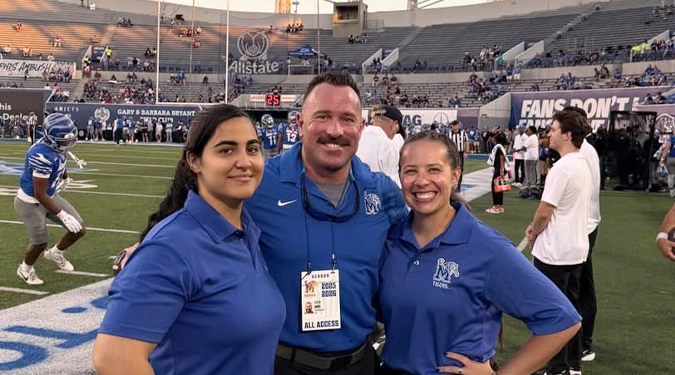
Few chiropractic students have the opportunity to develop their clinical skills inside a Division I athletics program. At the University of Memphis, eligible Southern California University of Health Sciences Doctor of Chiropractic students can work directly with collegiate athletes across multiple sports, gaining hands-on experience with patients whose physical demands, injuries, body types, and performance goals can vary dramatically.
Available to students during trimesters 8, 9, and 10, the University of Memphis clinical rotation can extend across multiple trimesters. Students may participate during fall, spring, or summer terms, giving them the opportunity to build significant experience in a collegiate sports medicine environment.
Clinical Experience Built on Volume and Variety
The rotation is overseen by Justin James, DC, an adjunct faculty member at SCU who works with the University of Memphis Athletic Department.
Students gain experience caring for athletes across sports as well as athletic department staff. A football lineman, soccer player, track athlete, or coach may each present different needs, requiring students to adapt their assessment, treatment, rehabilitation, and communication to the individual patient.
Previous participants have averaged more than 200 patient encounters per trimester, according to Dr. James. That volume gives students repeated opportunities to apply what they have learned while strengthening their clinical reasoning, patient-management skills, and confidence.
“Chiropractic is a hands-on profession, and students need experience working with real patients before graduation,” Dr. James said. “The Memphis rotation gives students the opportunity to treat athletes and staff across sports, body types, and ages. That variety helps them build the experience, knowledge, and confidence they will need in practice.”
The experience also challenges students to consider how factors such as sport, position, training schedule, injury history, and performance goals can influence patient care. Rather than approaching every case the same way, students learn to evaluate the circumstances that can shape an individualized treatment plan.
Learning as Part of an Integrated Sports Medicine Team
The rotation also places students within an interdisciplinary sports medicine environment. They have opportunities to work with and learn alongside athletic trainers, orthopedic surgeons, spine specialists, and other healthcare professionals involved in the care of collegiate athletes.
That collaboration helps students understand how chiropractic care can fit within a broader healthcare team. They can observe how providers communicate about a patient’s condition, determine when referrals may be appropriate, and coordinate care around treatment, rehabilitation, and return-to-play considerations.
“Healthcare should be an integrated practice,” Dr. James said. “The opportunity to work with, learn from, and collaborate with other healthcare professionals is important if we want to provide the best overall care possible for our patients.”
Those lessons extend beyond collegiate athletics. Understanding when to collaborate, when to refer, and how to communicate effectively with other healthcare professionals can prepare students to contribute to patient-centered care wherever they ultimately practice.
Developing Additional Sports Medicine Skills
Students participating in the Memphis rotation also receive exposure to dry needling under Dr. James’s supervision. According to Dr. James, participants receive more than 50 hours of instruction and hands-on training and receive documentation or certification reflecting those training hours.
Because laws and scope-of-practice requirements vary by state, a graduate’s ability to use dry needling in practice depends on the requirements of the jurisdiction in which they become licensed. The experience nevertheless gives students additional training in a technique used in some sports medicine and rehabilitation settings.
The length of the rotation can also help students build continuity with patients and the sports medicine team. Students who participate across multiple trimesters can continue developing their clinical skills rather than completing only a short-term assignment.
For Dr. James, that progression is closely connected to developing competence and, ultimately, confidence.
“Confidence is important for healthcare practitioners, but competence is something we can build through experience and education,” Dr. James said. “My role is to help students identify where they need to improve, strengthen those areas, and leave the rotation with a clearer understanding of their abilities and where they want to go next.”
An Opportunity Worth Planning for Early
Because the rotation is available during the later stages of the Doctor of Chiropractic program, Dr. James encourages students to learn about the opportunity well before they become eligible.
Planning ahead can give students time to understand the requirements and prepare for considerations such as relocation, housing, travel, and scheduling. It can also give students interested in sports medicine a clinical experience to work toward as they progress through the program.
“Opportunities like this do not come along often,” Dr. James said. “Planning early gives students time to make sure they meet the necessary requirements and arrive ready and excited to learn. It also gives them something to look forward to as they move through their education.”
The University of Memphis rotation gives SCU Doctor of Chiropractic students an opportunity to gain substantial patient-care experience, work with Division I athletes, expand their sports medicine skills, and see firsthand how chiropractic care can function within an interdisciplinary healthcare team.
SCU Doctor of Chiropractic students interested in the University of Memphis clinical rotation are encouraged to email Dr. James at justinjames@scuhs.edu or Dr. Jaqueline Beres at jaquelineberes@scuhs.edu to learn more and request program information.
Related Posts