Will AI Transform Healthcare—Or Just Make Sick Care More Efficient?
By Russell Greenfield, MD, Founding Executive Director, The Institute for the Advancement of Whole Health at Southern California University of Health Sciences
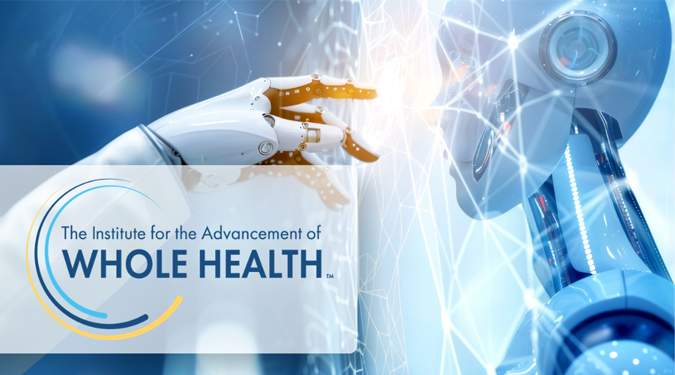
Artificial intelligence is rapidly reshaping healthcare, delivering capabilities that would have seemed unimaginable just a decade ago. AI-powered technologies can help identify abnormalities in medical images, analyze enormous volumes of clinical data, accelerate drug discovery, and reduce the administrative burden on healthcare professionals. According to the U.S. Food and Drug Administration, more than 1,600 AI-enabled medical devices had been authorized for marketing in the United States as of September 2026. The pace of innovation is extraordinary, and its potential to improve medical care is undeniable.
But amid the excitement surrounding these technological advances, we should be asking a more fundamental question: Will artificial intelligence help us create a system that produces better health, or will it simply make our existing system of treating illness more efficient?
The distinction matters because, despite remarkable advances in medical science, our healthcare system remains largely organized around diagnosing and treating disease rather than helping people achieve and maintain good health. Much of the current enthusiasm for AI reflects that same emphasis. Algorithms are being developed to identify cancers earlier, improve diagnostic accuracy, predict clinical deterioration, optimize treatment decisions, and streamline documentation. These are important advances that could save lives and improve patient experiences. They could also reduce administrative demands on healthcare professionals, potentially allowing them to spend more time with patients, although whether that time is returned to patients will depend on how healthcare organizations choose to use these efficiencies.
But if our goal is not simply to treat illness more effectively, but to help people live healthier lives, shouldn’t we be directing just as much innovation toward understanding why people become ill in the first place—and what helps them stay well?
That requires looking beyond medical care to the many other factors that shape health and well-being. The U.S. Department of Health and Human Services’ Healthy People 2030 initiative emphasizes the significant influence of economic stability, education, social relationships, neighborhood environments, and access to essential resources. In fact, the widely used County Health Rankings model has historically assigned clinical care just 20% of the weight among modifiable factors influencing population health, with the remaining 80% attributed to health behaviors, social and economic conditions, and the physical environment. While these proportions are estimates rather than fixed measures of causation, they reinforce an important reality: Where and how we live profoundly influence our health.
AI’s ability to analyze vast amounts of data from diverse sources could help us better understand how these interconnected factors shape health and well-being—and identify opportunities to improve outcomes. But realizing that potential will require us to overcome several important challenges:
- Fragmented and incomplete data. Healthcare information remains scattered across institutions and systems, while data about social, environmental, and behavioral factors may be incomplete, inconsistent, or nonexistent. Without a more comprehensive picture, AI’s ability to identify meaningful opportunities to improve health will remain incomplete.
- Reliability, equity, and accountability. AI can identify patterns, predict risks, and recommend interventions, but its conclusions are not always accurate, transparent, or appropriate for every population. Recommendations may reflect biases in the underlying data or fail to account for differences in socioeconomic circumstances, geography, and access to resources. The World Health Organization has emphasized the need for safeguards that protect patient safety, privacy, autonomy, and equity, as well as clear accountability when AI-informed decisions contribute to harm. We must also ensure that people with limited digital literacy, language barriers, or inadequate access to technology are not left behind.
- The gap between identifying risks and addressing them. An algorithm might identify someone at increased risk for cardiovascular disease, but it cannot ensure that person has access to nutritious food, safe places to exercise, affordable healthcare, or the support needed to make sustainable changes. Turning information into meaningful improvements in health requires resources, relationships, and coordinated action beyond the healthcare system.
- Misaligned financial and organizational incentives. If AI identifies opportunities to prevent illness through investments in nutrition, housing, or community services, who pays—and who benefits? Those financing such interventions aren’t necessarily the ones who benefit financially from better health outcomes. Similarly, what if healthcare organizations use AI-driven efficiencies primarily to increase patient volumes or reduce staffing rather than improve patient care? We must ensure that the financial and operational benefits of AI do more than increase profits; they must also improve health outcomes, enhance patient experiences, and support healthcare professionals through these changes.
- Preserving the human dimension of care. Healthcare is fundamentally a human endeavor, built on relationships, trust, empathy, and shared decision-making. AI can process enormous amounts of information, but it cannot fully understand a person’s lived experience, share in their vulnerability, or replace the human connection that is often essential to healing. For patients already skeptical of AI, the prospect of less interaction with healthcare professionals may further erode trust. These technologies should strengthen the relationships at the heart of healthcare, not diminish them.
Underlying all of these challenges is another essential consideration: Who gets to define what better health means? A Whole Health approach recognizes that success extends beyond clinical measures to include what matters most to each person, whether that’s maintaining independence, spending time with family, or pursuing meaningful personal goals. AI can help support those objectives, but individuals must retain the autonomy to define them.
But what if we get it right? What might be possible if we overcome these challenges and intentionally direct AI toward improving health rather than simply treating disease?
- At the population level: Imagine systems that integrate clinical information with environmental exposures, behavioral patterns, and community-level conditions to identify emerging health risks. Healthcare professionals, public health agencies, and community organizations could use these insights to coordinate earlier, more targeted interventions.
- At the individual level: Consider someone managing diabetes. AI could help identify patterns involving blood glucose, sleep, stress, nutrition, medication adherence, and access to healthy food. Those insights could inform not only medical treatment but also nutritional counseling, behavioral health support, and assistance overcoming barriers to healthier living. AI could also help identify local programs, services, and community resources that might otherwise be unfamiliar to the patient or the patient’s healthcare team.
- At the personal level: Imagine AI helping healthcare professionals understand what matters most to an individual and then identify practical ways to support those goals. By considering a person’s unique circumstances, preferences, and available community resources, AI could help identify personalized strategies that are not only meaningful but realistic and achievable.
- In expanding access to health information: One of AI’s most promising possibilities is its potential to make credible, understandable, and actionable health information more widely available. For someone with a smartphone, AI could help explain complex medical information, answer health-related questions, and identify appropriate resources and services, potentially overcoming barriers of geography, cost, or limited access to healthcare professionals. Of course, this will require ensuring that information is reliable, culturally and linguistically accessible, and used to support rather than replace appropriate professional care.
Realizing this vision will require collaboration among healthcare providers, insurers, employers, policymakers, researchers, technology developers, community organizations, and the people whose health and lives these technologies are intended to improve. At The Institute for the Advancement of Whole Health, we are working to bring together these diverse perspectives to challenge longstanding assumptions about healthcare and explore new approaches that place health and well-being at the center of our efforts.
As AI continues to evolve, we have an opportunity to consider not only what these technologies can accomplish, but what we should be asking them to accomplish. Making our current system more efficient would be a significant achievement. But using AI to fundamentally change how we help people achieve and sustain good health, in support of what matters most in their lives, would be transformative.
______
Russell Greenfield, MD, is the Founding Executive Director of The Institute for the Advancement of Whole Health at Southern California University of Health Sciences. The Institute brings together leaders across healthcare, education, research, and policy to advance the transformation toward a Whole Health system that prioritizes prevention, well-being, and person-centered care.
Related Posts