Acupuncture vs. Physical Therapy: Comparing Approaches to Pain and Rehabilitation

Choosing between acupuncture and physical therapy is one of the more practical questions patients face when managing pain, recovering from injury, or exploring options beyond medication. Both disciplines have strong clinical track records and address the body’s capacity to heal, but they operate from different theoretical frameworks and use different tools.
If you are considering a career in integrative healthcare, understanding where these two fields meet and diverge gives you a clearer picture of the kind of practitioner you want to become.
Southern California University of Health Sciences (SCU) prepares students for exactly this kind of evidence-informed, whole-person care environment through its Acupuncture and Chinese Herbal Medicine program.
SCU’s approach to acupuncture education emphasizes integrative whole-person health, meaning graduates are trained not just in needling technique, but in how to situate their work alongside other healthcare modalities. That kind of interprofessional awareness is increasingly what employers and patients expect.
Two Paths to the Same Patient: Understanding the Core Difference
Needles, Movement, and What Each Discipline Is Really Doing
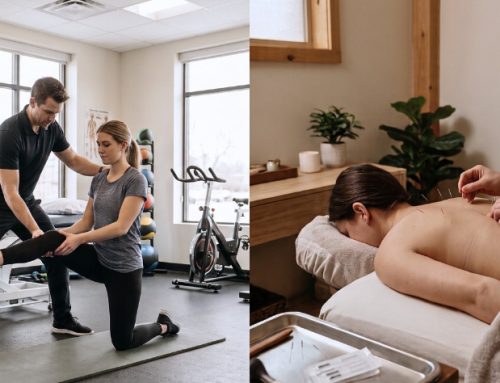
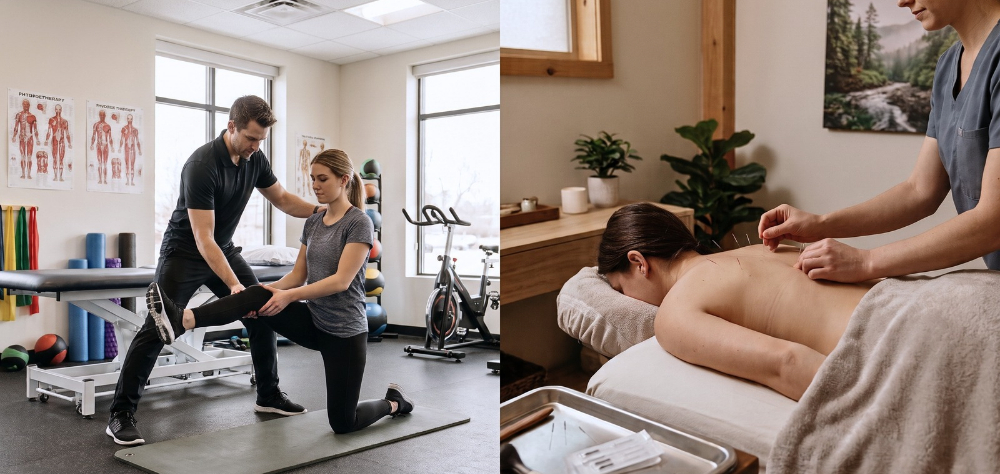
Acupuncture is a clinical practice rooted in Chinese medicine that uses thin needles inserted at specific anatomical points to influence the body’s physiological responses. Physical therapy uses movement, exercise, manual techniques, and modalities like ultrasound or electrical stimulation to restore function and reduce pain.
Both treat musculoskeletal and neurological conditions, but their entry points differ considerably. Acupuncture works on the premise that the body’s systems are interconnected, so lower back pain, for example, may involve not just local tissue but broader regulatory patterns, including the nervous system, circulatory function, and emotional stress load.
Physical therapy tends to focus more directly on biomechanical dysfunction: weak muscles, restricted range of motion, and poor movement patterns. Neither approach is inherently superior, and many clinical settings now use them together.
Why Every Integrative Healthcare Student Should Know Both
For someone exploring a career in patient-centered care, understanding these two disciplines is about more than choosing a specialty. It is about recognizing how different models of care approach the same patient problems.
The National Center for Complementary and Integrative Health has documented acupuncture’s clinical effectiveness for conditions including chronic low back pain, neck pain, osteoarthritis, and headache, which are several of the same conditions physical therapy commonly treats.
Practitioners who understand both paradigms are better positioned to work in interprofessional environments, refer appropriately, and communicate with patients about their options.
SCU’s acupuncture curriculum is built with exactly that cross-disciplinary fluency in mind. Students who want stronger preparation in foundational sciences before applying may consider SCU’s Accelerated Health Sciences courses as a first step.
Where the Real Training Differences Begin
How You Read a Patient Depends on How You Were Taught to Look
One of the clearest structural differences between these two fields is how each discipline gathers and interprets clinical information. Physical therapists use standardized orthopedic assessments, functional movement screens, and outcome measures tied to range of motion, strength, and pain scales.
Acupuncturists trained in Chinese medicine use pattern differentiation, a diagnostic framework that incorporates pulse quality, tongue observation, symptom clustering, and the patient’s subjective experience to identify underlying imbalances.
In SCU’s acupuncture program, students develop clinical reasoning skills grounded in both traditional Chinese diagnostic theory and biomedical assessment. That dual competency matters in a healthcare environment where acupuncturists routinely work alongside physicians and physical therapists.
From Needle Selection to Herbal Formulas: What a Full Treatment Plan Looks Like
Physical therapy treatment plans are typically structured around progressive loading, functional goals, and measurable benchmarks. A patient recovering from ACL repair might follow a 12-week protocol with defined milestones at each phase.
Acupuncture treatment planning draws on a different logic, adjusting point selection and treatment frequency based on how a patient’s pattern presentation evolves over time. A notable distinction: graduate-level acupuncture education frequently includes training in Chinese herbal medicine alongside needling, which is an additional clinical tool that physical therapists do not hold.
SCU’s curriculum incorporates herbal medicine as part of a comprehensive approach to Chinese medicine practice, with evidence-informed methods woven throughout. Students learn to evaluate and apply clinical research within a traditional theoretical framework.
Digging Deeper: What the Research Says
The Mechanism Question: Is Acupuncture Just a Placebo?
A common misconception about acupuncture is that its mechanisms are entirely theoretical or unverifiable. The research record tells a more specific story.
NIH-published research has identified measurable physiological effects of acupuncture, including stimulation of A-delta and C nerve fibers that triggers endorphin release and modulates the autonomic nervous system, findings that hold up under sham-controlled trial conditions.
The World Health Organization has formally identified 28 conditions for which acupuncture has been proven effective through controlled trials, and a further 63 where it has demonstrated therapeutic benefit.
These findings have helped acupuncture gain traction in hospital-based integrative medicine programs, VA facilities, and since January 2020, Medicare coverage for chronic low back pain, covering up to 12 sessions in 90 days, extendable to 20 if the patient is responding to treatment.
For students choosing between these fields, the distinction is not one of credibility but of clinical orientation. One field asks how the body is moving; the other asks how the body is regulating itself.
Choosing a Program Means Choosing a Clinical Worldview
Physical therapy programs require a separate clinical doctorate (DPT) and typically include significant prerequisite science coursework. Acupuncture and Chinese medicine graduate programs, including SCU’s, have their own admissions requirements.
Students who need to strengthen their science background before applying may find SCU’s Accelerated Health Sciences courses a practical bridge.
Career settings also differ. Physical therapists practice frequently in orthopedic clinics, hospitals, and sports medicine environments. Acupuncturists work in private practice, integrative medicine centers, pain management clinics, and increasingly in hospital-affiliated and VA settings, where the U.S. Department of Defense has formally integrated acupuncture, including Battlefield Acupuncture, into pain management protocols for veterans.
The Details That Shape Your Career Path
The Patient in the Room Feels the Difference
The clinical experience of receiving each type of care differs in ways that matter to both patients and practitioners. Physical therapy sessions often involve active participation, with patients performing exercises, engaging in movement drills, and building functional capacity over time.
Acupuncture sessions tend to be quieter and more receptive, with patients resting while needles are retained for 20 to 40 minutes. Both require a strong therapeutic relationship, but the relational dynamics differ considerably.
Acupuncturists often develop longer-term relationships with patients managing chronic conditions, while physical therapists frequently work through acute recovery phases with a defined discharge point. Understanding which model aligns with your interests is a meaningful part of choosing a training path.
Licensing, Program Length, and What Comes After Graduation
The two fields differ meaningfully in how long they take to enter and what licensure involves.
Graduate-level acupuncture and Chinese medicine programs typically run three to four years and culminate in a Master of Science or Master of Acupuncture and Oriental Medicine degree. Graduates must pass national board exams administered by the National Certification Board for Acupuncture and Herbal Medicine (NCBAHM) and meet state licensure requirements.
In California, the California Acupuncture Board administers a separate state-specific licensing examination in addition to the NCBAHM boards, meaning California-based graduates must pass both before practicing independently.
Becoming a licensed physical therapist requires a Doctor of Physical Therapy (DPT) degree, a three-year post-baccalaureate program. DPT graduates must pass the National Physical Therapy Examination (NPTE), an exam administered by the Federation of State Boards of Physical Therapy (FSBPT) and required for licensure in all 50 states.
For graduates planning to practice in California specifically, PT licensure also involves an additional. Along with the NPTE, California PTs must pass the CAL-JAM (California Jurisprudence Assessment Module), a state-specific law exam.
Both exams must be passed before a full license is issued, though California does allow new DPT graduates to begin working under supervised “physical therapist license applicant” status while their NPTE results are pending.
Both fields require ongoing continuing education to maintain licensure. California PTs must complete 30 hours of continuing competency education every two years, including 2 mandatory hours of ethics and laws and 4 mandatory hours of Basic Life Support, with renewal tied to the licensee’s birth month.
For acupuncture, the California Acupuncture Board maintains its own continuing education requirements, and the licensed scope of practice for acupuncturists in California is notably broad, covering herbal medicine and certain physical modalities that in several areas extends beyond what physical therapists are authorized to do.
Both fields have interstate licensing frameworks worth knowing about. Physical therapy has the PT Compact, which allows licensed PTs to practice across participating states with reduced administrative burden. For acupuncture, multi-state practice still requires individual state applications in most cases, though NCCAOM certification is accepted as the credential baseline in the majority of licensing states.
SCU’s program, based in Whittier, California, prepares students to meet both NCBAHM and California Acupuncture Board licensure requirements.
SCU in Action: Building Practitioners for the Integrative Era
Accredited Clinical Training That Meets National Standards
SCU’s Acupuncture and Chinese Herbal Medicine program is accredited by the Accreditation Commission for Acupuncture and Herbal Medicine (ACAHM), the national accrediting body for acupuncture programs in the United States. This accreditation confirms that the program meets established standards for curriculum content, clinical training hours, and institutional resources.
Students train in SCU’s on-site teaching clinics, applying diagnostic and treatment skills under faculty supervision before entering independent practice.
A Whole-Person Philosophy That Shapes Every Course
SCU has published institutional materials articulating its commitment to whole-person health as a guiding clinical and educational philosophy, one that frames health as “comprehensive well-being, not merely the absence of illness.” This requires practitioners to consider physical, mental, spiritual, socioeconomic, and environmental factors together.
This framework directly informs how acupuncture is taught at SCU: not as a standalone needle technique, but as a clinical discipline within a broader understanding of what it means to care for a person.
Your Next Step Toward a Career in Acupuncture and Chinese Medicine
The comparison between these two fields does not have a single right answer for every prospective student. What it does reveal is the range of ways that healthcare practitioners can approach pain, rehabilitation, and whole-person wellness.
Acupuncture offers a distinct clinical philosophy, a growing evidence base, and a patient relationship model that many practitioners find deeply meaningful.
If that path fits what you are looking for, SCU’s Acupuncture and Chinese Herbal Medicine program offers rigorous graduate training grounded in both classical theory and evidence-informed clinical practice.
Explore the program, review the curriculum, and connect with the admissions team to understand what your path forward looks like.
Frequently Asked Questions
How long does it typically take to see results from acupuncture compared to physical therapy?
Physical therapy outcomes are often measurable within a defined protocol. A typical course of care runs 6 to 12 weeks with progress benchmarked at each visit against functional goals like range of motion or strength scores. Acupuncture timelines are less linear.
Acute conditions such as muscle strain or tension headache may respond within 3 to 5 sessions, while chronic conditions like long-standing nerve pain often require 10 or more treatments before sustained change is apparent.
A PubMed comparative study on fibromyalgia found that both PT and acupuncture produced measurable reductions in pain and functional impairment scores over the same treatment window, with neither modality outperforming the other.
Both disciplines generally recommend reassessing the treatment plan at regular intervals rather than committing to indefinite care without documented progress.
Is acupuncture covered by health insurance in the United States?
Coverage varies significantly by state, insurer, and condition. As of January 2020, Medicare began covering acupuncture for chronic low back pain, up to 12 sessions in 90 days, extendable to 20 if the patient is improving, and this shift has encouraged some private insurers to expand their own coverage.
A JAMA Network Open study tracking insurance trends from 2010 to 2019 found that as of 2018 to 2019, only about one-third of surveyed commercial, Medicaid, and Medicare Advantage plans covered acupuncture, with most patients still paying out-of-pocket.
One practical detail worth knowing: as of 2023, licensed acupuncturists cannot bill Medicare directly and must instead bill through an existing Medicare provider, which can create access barriers in some clinical settings.
Patients using acupuncture for conditions beyond chronic low back pain, including headache, osteoarthritis, or anxiety-related disorders, may find coverage more variable depending on their plan.
What should a patient expect during their first acupuncture appointment?
A first acupuncture visit typically runs 60 to 90 minutes, longer than subsequent sessions, because the practitioner conducts a detailed intake before any needles are placed. This intake goes beyond a standard medical history, assessing pulse quality at multiple wrist positions, observing the tongue, and asking about sleep, digestion, emotional state, and pain character.
Acupuncture needles are typically 0.18 to 0.25mm in diameter, far finer than a hypodermic needle, and most patients report minimal discomfort at insertion. Some experience a brief aching, tingling, or heaviness around the needle site, which practitioners refer to as “de qi,” a sensation considered a positive indicator of physiological response.
The clinical importance of de qi is still debated: at least one osteoarthritis study found better outcomes in patients who felt it, while other trials found no significant difference in pain relief between patients who did and did not experience the sensation. Needles are retained for 20 to 40 minutes, after which most patients report feeling calm and rested.
How does acupuncture work physiologically?
NIH-published research has shown that acupuncture needle insertion stimulates A-delta and C nerve fibers, triggering the release of endogenous opioids and modulating autonomic nervous system activity. These effects have been observed under sham-controlled conditions, distinguishing them from placebo response alone.
Additional research has documented changes in cortical activity patterns and local anti-inflammatory responses at needle sites. This physiological specificity is part of why acupuncture has moved into mainstream clinical settings, including VA hospitals and Medicare-covered care.
Are there conditions where physical therapy is clearly the better choice over acupuncture?
Physical therapy has a stronger evidence base for post-surgical rehabilitation, particularly orthopedic procedures like ACL reconstruction, rotator cuff repair, and joint replacement, where restoring specific movement mechanics and muscle function follows a defined recovery protocol.
It is also the standard of care for neurological rehabilitation after stroke or traumatic brain injury. A systematic review of 467 randomized controlled trials involving over 25,000 stroke patients, published in PLOS One, found strong evidence for PT interventions targeting gait recovery, arm-hand function, and physical fitness in the post-stroke period.
Acupuncture is not contraindicated in these contexts and may be used alongside physical therapy. However, the biomechanical and neuromuscular demands of post-surgical recovery are where physical therapy’s structured, movement-based model has the deepest and most rigorously studied clinical foundation.
Can acupuncture be safely combined with conventional medical treatments or physical therapy?
Acupuncture is increasingly used within integrative care models, where it complements conventional treatments such as physical therapy, medication management, and post-surgical rehabilitation.
According to the National Center for Complementary and Integrative Health, acupuncture is often incorporated into multidisciplinary pain management strategies, particularly for chronic musculoskeletal conditions where combining therapies may improve overall outcomes. From a safety perspective, acupuncture has a well-established profile when performed by a licensed practitioner.
In the BMJ-published York acupuncture safety study, researchers reported no serious adverse events across 34,407 treatments, with minor effects such as bleeding, needling pain, and symptom aggravation reported in a small percentage of cases. This level of safety has supported acupuncture’s growing role in hospital-based and integrative medicine settings.
Clinically, acupuncture and physical therapy often serve complementary functions rather than competing ones. Physical therapy focuses on restoring movement, strength, and biomechanical function, while acupuncture can help regulate pain signaling, inflammation, and nervous system activity.
In some rehabilitation programs, acupuncture is used to reduce discomfort and improve tolerance for exercise-based therapy, supporting a more coordinated and patient-centered approach to recovery.
Related Posts