Massage Therapy vs. Acupuncture: Career Paths & Approaches
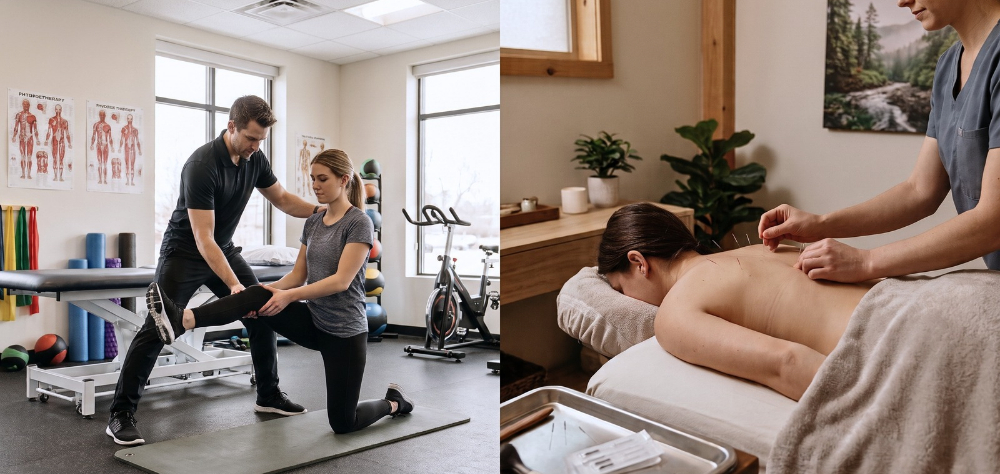
Choosing a path in integrative healthcare often starts with a single, practical question: which modality actually works, and for what? Physiotherapy versus acupuncture is a comparison that surfaces constantly in clinical discussions, patient consultations, and graduate school research alike.
If you’re drawn to patient-centered care and want a career grounded in research-backed practice, understanding how these two disciplines differ, and where they overlap, is foundational to making smart decisions about your education and your future role in healthcare.
Southern California University of Health Sciences (SCU)’s Acupuncture and Chinese Herbal Medicine program trains practitioners to work at exactly this intersection: clinically rigorous, rooted in tradition, and informed by modern research.
If you’re weighing your options in integrative health education, explore SCU’s program to see how it prepares graduates for a healthcare environment that increasingly values both approaches.
Two Disciplines, Two Worldviews: The Basics of Physiotherapy vs. Acupuncture
Needles, Movement, and the Machinery Behind Each Modality
Physiotherapy (also called physical therapy) is a healthcare discipline focused on restoring movement, function, and physical capacity following injury, surgery, or chronic musculoskeletal conditions.
Practitioners use manual therapy, therapeutic exercise, electrophysical agents, and patient education to address the mechanical and neuromuscular causes of pain and dysfunction.
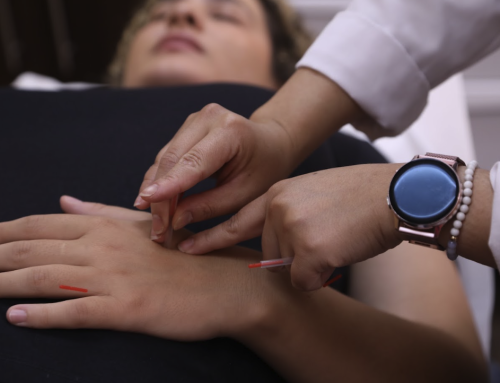
Acupuncture, a core component of traditional Chinese medicine (TCM), involves inserting thin needles at specific anatomical points to influence physiological processes. From a classical standpoint, this regulates the flow of qi through meridian pathways.
From a contemporary biomedical lens, research cited by the NCCIH shows that acupuncture modulates the nervous system, triggers endogenous opioid release, reduces inflammation, and influences connective tissue signaling. These mechanisms are now observable through fMRI and PET scan imaging of brain activity changes in pain-processing regions like the limbic system and prefrontal cortex.
Neither discipline is simply old versus new. Both are recognized by major health bodies, both carry accumulating clinical evidence, and both are finding expanded roles in integrative care.
Why Your Answer to This Question Shapes Your Entire Career Trajectory
Patients rarely arrive with conditions that fit neatly into one therapeutic box. Someone managing chronic low back pain may benefit from both acupuncture’s neurochemical effects and physiotherapy’s movement rehabilitation.
A practitioner who understands both frameworks is better equipped to collaborate, refer appropriately, and advocate for patients within complex care teams.
For students considering careers in integrative medicine, this comparison points to a broader choice: do you want to specialize in functional rehabilitation, or do you want to work within a diagnostic framework that considers physical symptoms alongside mental, emotional, and environmental factors?
SCU’s Acupuncture and Chinese Herbal Medicine program prepares students for the latter, with training that blends classical theory with modern clinical application.
Students who want to strengthen their science foundation before entering graduate-level coursework may benefit from SCU’s Accelerated Health Sciences offerings, which cover prerequisite subjects in a flexible format.
Beneath the Surface: The Fundamentals That Separate These Two Disciplines
How Each Modality Decides What’s Wrong, and What to Do About It
Physiotherapy assessment follows a biomedical model: practitioners evaluate range of motion, strength, posture, gait, and neurological function to identify the structural source of dysfunction. Treatment targets the impairment directly through mobilization, therapeutic loading, and neuromuscular re-education.
Acupuncture diagnosis in Chinese medicine draws on a different framework. Practitioners use the four examinations (inspection, auscultation and olfaction, inquiry, and palpation including pulse and tongue diagnosis) to identify pattern disharmonies that explain a patient’s presentation.
A condition like insomnia is not treated the same way in every patient; the underlying pattern determines the point selection. Understanding not just where to needle but why, based on a patient’s full constitutional picture, is a clinical skill developed over years of structured coursework and supervised practice at programs like SCU’s Master of Acupuncture and Chinese Herbal Medicine and Doctor of Acupuncture and Chinese Herbal Medicine.
What 21,000 Patients and a Decade of Trials Actually Revealed
The research landscape for both modalities has matured significantly. A 2017 meta-analysis published in the Journal of Pain analyzed data from nearly 21,000 patients across multiple randomized controlled trials and found that acupuncture produced statistically significant improvements in chronic pain, including back pain, neck pain, osteoarthritis, and headache, with effects persisting beyond the active treatment period.
Physiotherapy’s evidence base for musculoskeletal and post-surgical rehabilitation is similarly well-established. However, a 2017 systematic review in the Journal of Orthopaedic and Sports Physical Therapy found that long-term maintenance of gains was often inconsistent without sustained patient adherence to home exercise programs, a practical limitation that rarely surfaces in physiotherapy-favorable comparisons.
Where the debate gets clinically specific is in direct comparative evidence. A 2020 Cochrane review examining acupuncture against usual care, which included physiotherapy, for chronic non-specific low back pain found inconclusive results between the two approaches in the short term, a finding that challenges the assumption that physiotherapy is the automatic first-line superior option for this patient population.
Cutting Through the Noise: A Closer Look at What the Research Really Shows
“Alternative” vs. “Proven”: Why That Framing Gets It Wrong
A persistent misconception in this comparison is that physiotherapy is “proven” while acupuncture is “alternative.” The NCCIH recognizes acupuncture as a supported intervention for chronic pain and actively funds research into its neurobiological mechanisms. It is not classified as experimental in the contexts where clinical evidence has been established.
It is worth noting that acupuncture point specificity remains an active area of debate. Studies using sham acupuncture (needling at non-traditional points) have sometimes produced outcomes comparable to verum (traditional) acupuncture, raising questions about whether point location or the needling act itself is the primary driver of benefit.
This is a genuinely open research question that practitioners trained in rigorous academic programs are equipped to engage with critically, which is precisely what SCU’s curriculum prepares students to do.
From Comparison to Decision: Choosing the Right Educational Path
If this comparison has clarified that Chinese medicine’s whole-person diagnostic approach aligns with how you want to practice, the next practical question is whether you’re academically ready for graduate-level coursework. Programs like SCU’s require foundational preparation in biology, anatomy, and physiology.
Students who need to complete or strengthen those prerequisites can do so through SCU’s Accelerated Health Sciences program, which offers flexible, focused science courses designed to build readiness for health professions graduate study.
Choosing between these two educational paths isn’t just about modality preference, it’s about the kind of clinician you want to become and the patient populations you want to serve.
What the Physiotherapy vs. Acupuncture Debate Doesn’t Tell You (But Should)
The Quiet Mainstreaming of Integrative Care
One factor that rarely appears in these comparisons is how the demand for integrative care is reshaping institutional policy at scale. The U.S. Department of Veterans Affairs now offers acupuncture across its Whole Health system as a first-line option for pain — a shift driven in significant part by the opioid crisis.
The CDC’s 2016 opioid prescribing guidelines explicitly encouraged non-pharmacological interventions, and multiple major health systems, including Kaiser Permanente and several academic medical centers, used that guidance as policy justification for expanding acupuncture access. Its integration into mainstream care is not a grassroots trend, it is an institutional response to a documented public health need.
According to SCU’s published institutional resources on Whole Health, the university is explicitly aligned with this shift. SCU positions acupuncture and Chinese medicine not as an alternative to mainstream care, but as a contribution to a more complete model of it, one that addresses the mental, spiritual, socioeconomic, relational, and environmental factors affecting a person’s wellbeing alongside the physical.
Three to Four Years That Look Very Different Depending on Where You Train
Graduate programs in acupuncture and Chinese medicine typically require three to four years of full-time study, including significant supervised clinical hours. Career outlook data from the Bureau of Labor Statistics projects 13% growth through 2032 for the “other healthcare practitioners” category, faster than average, which includes acupuncturists.
That figure carries more weight when paired with the VA’s system-wide adoption and the CDC-driven expansion of non-pharmacological care across major health systems.
At SCU, the Acupuncture and Chinese Herbal Medicine program integrates traditional diagnostic training with applied clinical preparation, giving graduates the skills to work in private practice, integrative clinics, hospital environments, and beyond. If you’re ready to take the next step, contact SCU’s admissions team to learn about program requirements and how to build a timeline that works for your background.
SCU in Practice: What Acupuncture and Chinese Medicine Education Looks Like Here
Accreditation, National Boards, and Why Both Matter Before You Enroll
SCU’s Acupuncture and Chinese Herbal Medicine program holds accreditation through the Accreditation Commission for Acupuncture and Herbal Medicine (ACAHM), the recognized national accrediting body for acupuncture and Oriental medicine programs in the United States.
This accreditation is a prerequisite for graduates to sit for national board examinations administered by the NCBAHM, the body that has certified over 28,000 practitioners currently working across the country. State licensure in most states requires NCBAHM certification, making accreditation a non-negotiable factor when evaluating any program.
Training Alongside PAs, Chiropractors, and OTs, and Why That Changes Everything
SCU’s program exists within a broader university structure that includes chiropractic, physician assistant studies, occupational therapy, and psychology programs. This environment produces graduates who can read a referral note from a PA, coordinate with a chiropractor on a shared patient, and document in a way that makes sense to an MD.
These are skills that a standalone acupuncture school’s curriculum rarely addresses directly. As acupuncture continues to move into hospital and health system settings, that cross-disciplinary fluency is becoming a genuine hiring differentiator.
Take the Next Step Toward a Career in Acupuncture and Chinese Medicine
The question of physiotherapy or acupuncture rarely resolves into a clean winner. What it does reveal is how differently these two disciplines approach the patient, the diagnosis, and the treatment relationship.
For students drawn to a framework that considers the whole person, body, mind, and the social and environmental factors that shape health, acupuncture and Chinese medicine offers a rigorous, research-grounded path into that kind of practice.
SCU’s Acupuncture and Chinese Herbal Medicine program is built for exactly that: practitioners who can work within modern healthcare, engage critically with clinical research, and deliver care that goes beyond symptom management. Explore the program, review the curriculum, and request information to take the next concrete step toward this career path.
Frequently Asked Questions
Does insurance typically cover acupuncture treatment, and does that affect career viability?
Insurance coverage for acupuncture has expanded considerably in recent years. A 2020 Medicare coverage decision set a significant precedent: Medicare now covers up to 12 acupuncture sessions per year for chronic low back pain, with an additional 8 sessions available for patients showing measurable improvement.
Beyond Medicare, the Kaiser Family Foundation’s Medicaid Benefits data states that 36 states and Washington D.C. now include acupuncture in their Medicaid benefits. This shift toward reimbursement has meaningfully changed the business viability of acupuncture practice, particularly for practitioners working in community health and integrative medicine settings.
How does acupuncture training handle the transition from classroom to patient care?
Most accredited acupuncture programs structure clinical training as a progressive sequence. Students begin by observing licensed supervisors, then assist with patient intake, then perform treatments under direct supervision before moving to greater clinical autonomy.
The ACAHM accreditation standards require a minimum of 660 supervised clinical hours for acupuncture-only programs and 870 hours for programs that include herbal medicine. These hours must be completed before a student is eligible to sit for NCBAHM board examinations, a threshold designed to build both technical skill and clinical confidence before independent licensure.
Can someone with a background in physiotherapy transition into acupuncture, or vice versa?
A licensed physiotherapist seeking to add dry needling, a technique that borrows from acupuncture but operates within a biomedical rather than TCM framework, can often complete continuing education courses without returning to a degree program. The APTA’s position statement on dry needling outlines how the association views this within physiotherapy’s existing scope of practice.
Transitioning into full acupuncture licensure, however, requires completing an ACAHM-accredited master’s program regardless of prior clinical background. There is no abbreviated licensure pathway for physiotherapists seeking to practice TCM-based acupuncture, though some programs do consider transfer credits for prior graduate coursework on an individual basis.
What is the difference between dry needling and acupuncture, and why does it matter professionally?
Dry needling uses acupuncture-style needles to target myofascial trigger points and is typically practiced by physiotherapists within their existing scope of practice. Acupuncture, by contrast, operates within a complete diagnostic and theoretical system that includes pattern differentiation, herbal medicine, and a distinct framework for understanding health and disease.
The professional distinction matters because scope of practice laws vary significantly by state. The NCBAHM has published a formal white paper addressing this distinction in detail, arguing that dry needling as practiced by non-acupuncturists constitutes unlicensed acupuncture in many jurisdictions. Prospective students should be aware of this regulatory landscape when evaluating career options.
How do salary and self-employment rates compare between acupuncturists and physiotherapists?
According to the Bureau of Labor Statistics, physical therapists earn a median annual wage of around $99,710, with the majority employed in hospitals, outpatient clinics, and skilled nursing facilities.
Acupuncturists follow a notably different career structure, with self-employment rates above 60% according to the American Society of Acupuncturists, and a median annual income of around $75,000 for full-time practitioners.
That autonomy offers real advantages; flexible scheduling, practice ownership, and the ability to shape a clinical philosophy, but it also requires business management skills that formal training programs do not always address. Prospective students should factor practice model preferences, not just clinical interests, into their program selection.
What conditions is acupuncture most commonly used for in clinical practice?
Acupuncture is most commonly applied for chronic and acute pain (back, neck, knee, headache), stress and anxiety-related presentations, digestive concerns, sleep disturbances, and adjunctive support during cancer treatment to manage nausea and fatigue.
The World Health Organization’s review of controlled clinical trials lists 28 conditions for which acupuncture has demonstrated effectiveness and an additional 63 for which it may be beneficial, a scope that most single-condition comparisons with physiotherapy fail to capture.
Beyond private practice, graduates increasingly find roles in community health centers, sports medicine clinics, and corporate wellness programs, settings that reflect how broadly the modality’s applications are now recognized.
Is a doctoral-level acupuncture degree worth pursuing, and what does it add to practice?
The Doctor of Acupuncture and Oriental Medicine (DAOM) is a post-master’s clinical doctorate available to licensed acupuncturists who want to deepen specialization or move into academic or leadership roles. Unlike a research doctorate, the DAOM is practice-focused and typically emphasizes advanced clinical competency in areas such as oncology, orthopedics, or internal medicine.
At SCU, this entry-level model plays out directly: the Doctor of Acupuncture and Chinese Herbal Medicine (DAcCHM) program runs just one term longer than SCU’s master’s track, and that additional term adds a clinical concentration in Acupuncture Orthopedics or Healthy Aging, a capstone project, and expanded clinical training hours beyond what the master’s degree requires.
The degree does not currently change licensure requirements in most states, but it is increasingly relevant for practitioners seeking hospital privileges, faculty positions, or roles in integrative medicine departments where doctoral credentials carry institutional weight. The Council of Colleges of Acupuncture and Herbal Medicine (CCAHM) provides guidance on accredited doctoral programs and their role within the broader profession.
Related Posts