Acupuncture vs. Chiropractic: Scope of Practice, Training, and When Each Is Used

Choosing between acupuncture and chiropractic care is a question patients and prospective healthcare students face more often than you might expect. Both fields sit within holistic, whole-person healthcare. Both address pain, movement, and quality of life without defaulting to pharmaceutical intervention.
But their theoretical foundations, clinical techniques, and educational pathways are distinct enough that understanding the difference matters, whether you are a patient weighing options or a future practitioner deciding where your career fits.
If you are exploring a career in acupuncture and Chinese medicine, SCU’s Acupuncture and Chinese Herbal Medicine program offers a graduate-level pathway that prepares you for licensure with clinical training grounded in both classical theory and research-backed practice.
This guide is intended to help you understand exactly how these two disciplines compare.
Two Paths Into the Same Patient’s Room
Needles, Adjustments, and What Sets Them Apart
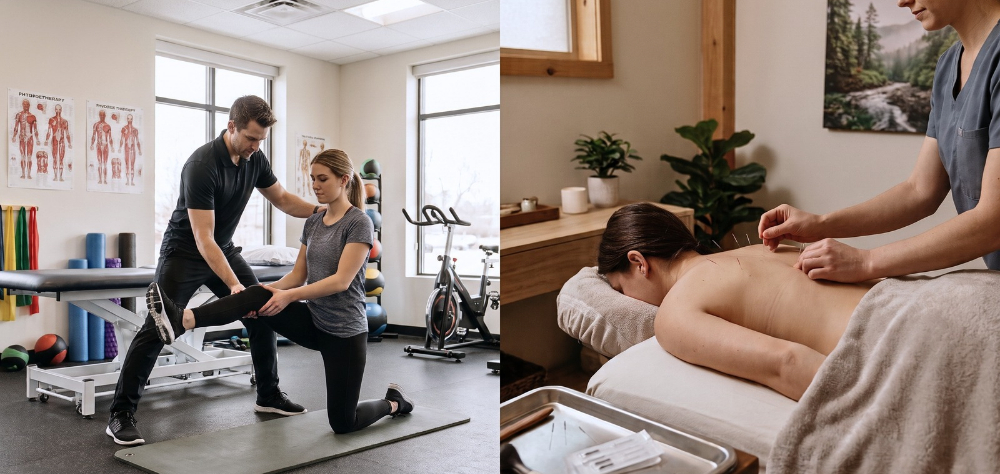
Acupuncture and chiropractic care both belong to the broader category of non-pharmacological, hands-on healthcare, but their methods are categorically different.
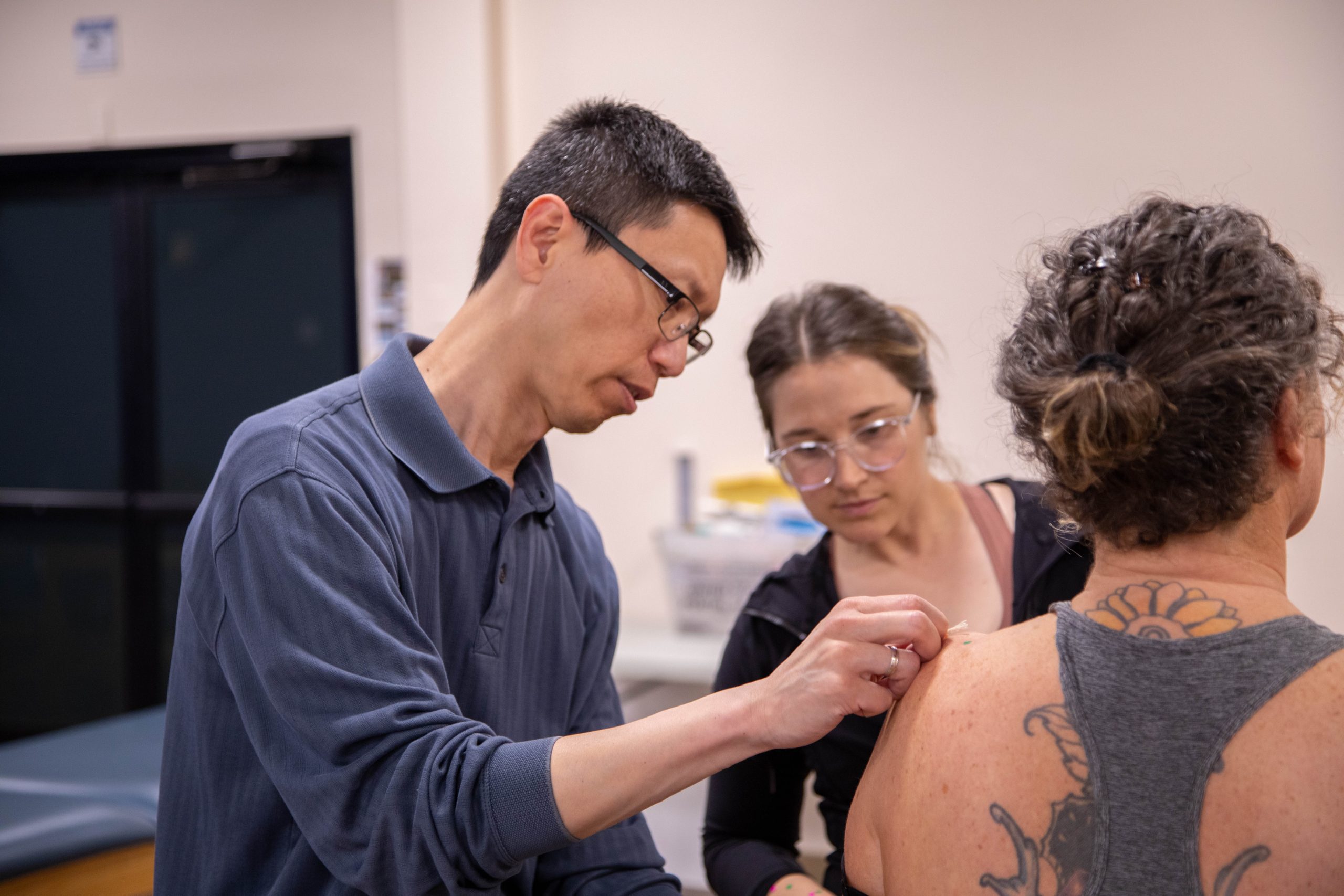
Acupuncture is a core component of Chinese medicine, a system developed over more than 2,000 years that uses fine needles inserted at specific points on the body to influence the flow of qi (vital energy) along pathways called meridians.
Modern clinical research has found that acupuncture affects the nervous system, connective tissue, and inflammatory response, which is why it has been adopted into hospital settings and VA health systems nationwide.
Chiropractic care centers on the diagnosis and treatment of musculoskeletal disorders, particularly those related to the spine. Chiropractors use spinal manipulation, sometimes called an adjustment, to correct alignment issues, reduce nerve interference, and restore joint mobility. Their theoretical model is rooted in the relationship between spinal structure and nervous system function.
Both fields require graduate-level training and state licensure. Neither is a shortcut to healthcare practice.
Your Career, Your Philosophy: Why the Distinction Changes Everything
If you are drawn to patient-centered care that addresses the full spectrum of a person’s health, understanding the scope of each field will shape which educational path makes sense.
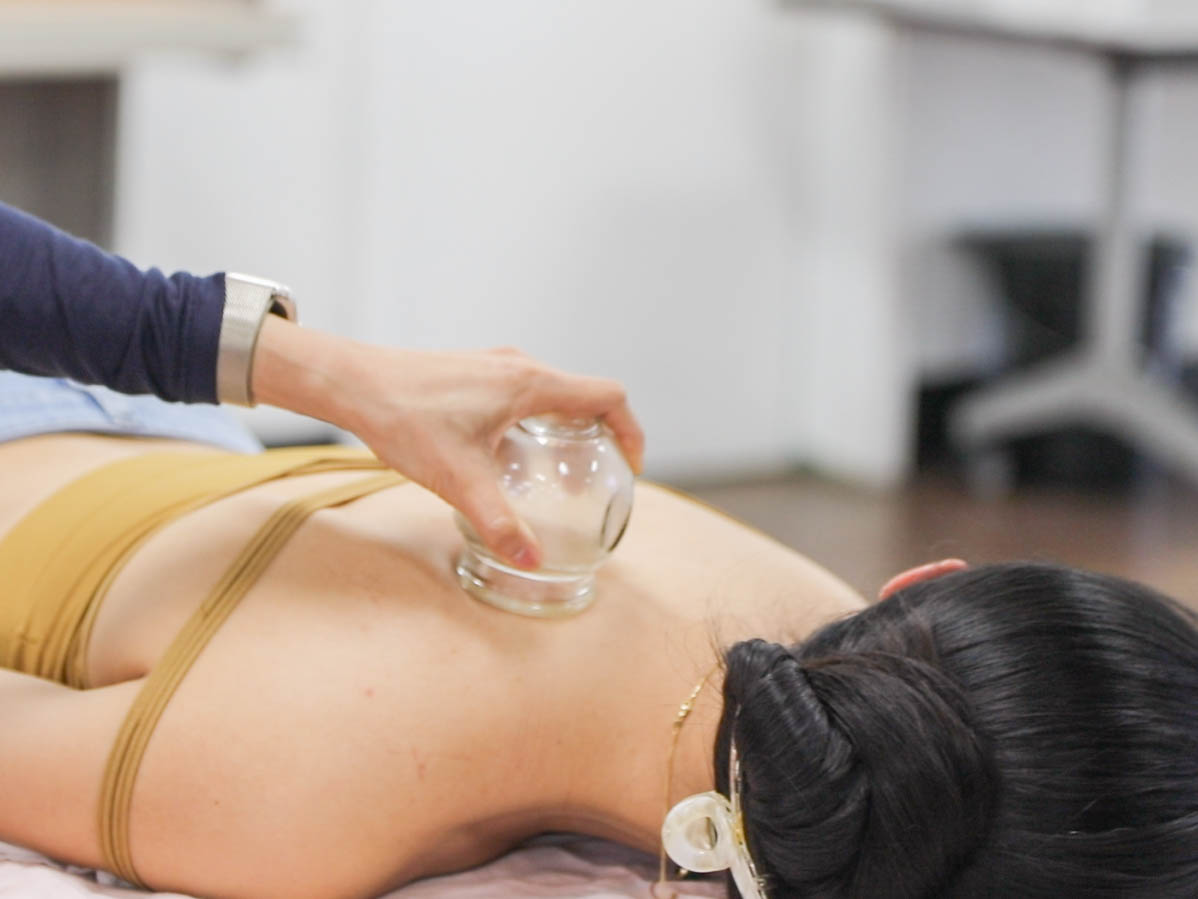
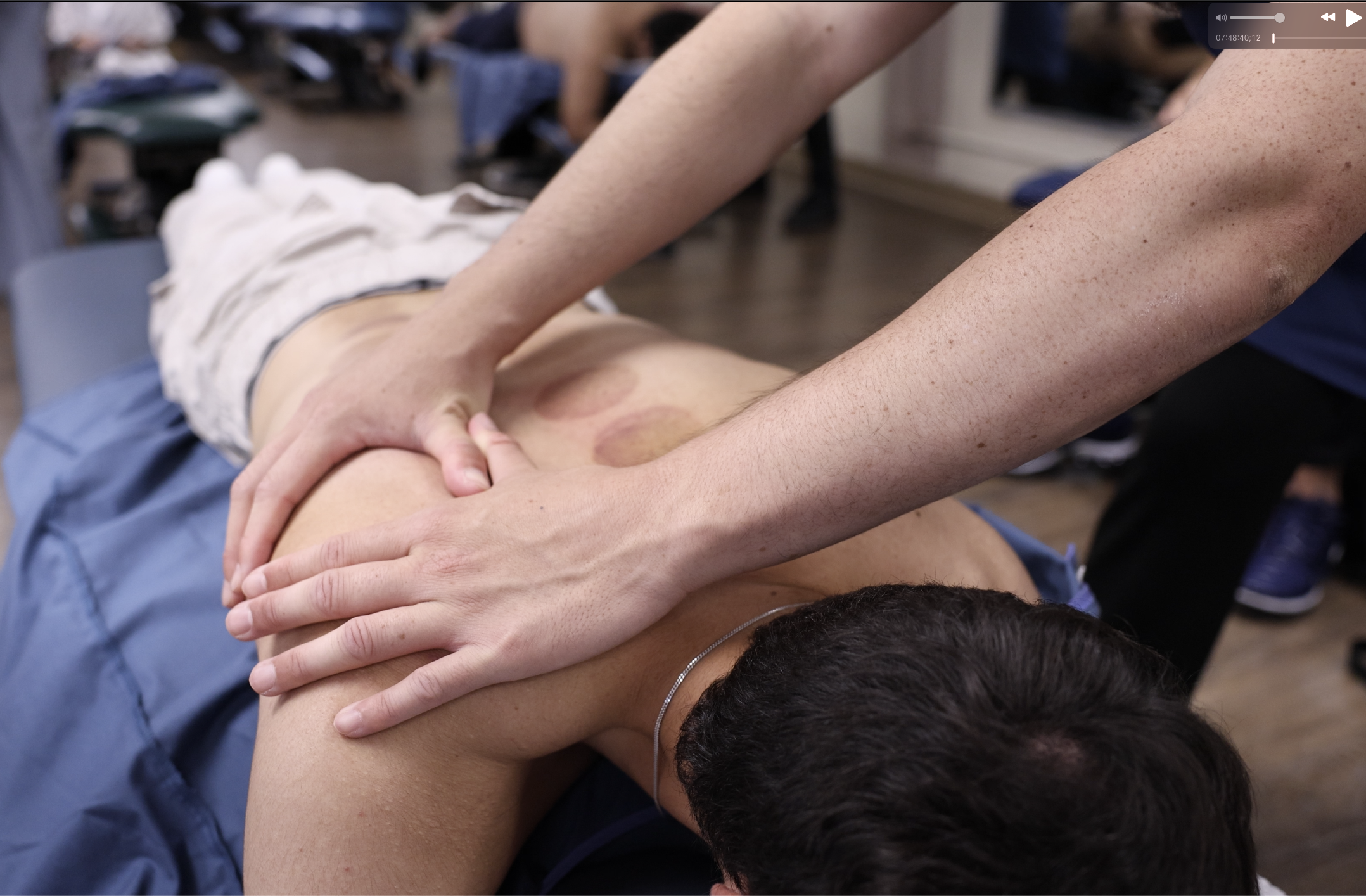
Acupuncture and Chinese medicine practitioners work with a wider range of systemic conditions, from chronic pain and fertility support to anxiety, digestive disorders, and oncology support, using a toolkit that includes acupuncture, herbal medicine, cupping, and dietary recommendations.
Chiropractors work primarily in the musculoskeletal domain, with the spine and joints as their central focus. Scope of practice varies by state, but most chiropractors concentrate on conditions like low back pain, neck pain, headaches, and sports injuries.
Both professions are growing. The Bureau of Labor Statistics projects steady employment growth for chiropractors, while demand for licensed acupuncturists continues to rise as more health systems bring complementary care in-house.
One detail worth knowing: the BLS does not yet maintain a standalone occupational code for acupuncturists, which means salary benchmarking for the field requires more legwork than for chiropractic.
Chiropractors fall under SOC code 29-1011 with a reported median annual wage of $75,000. For acupuncturists, income data is less centralized and varies considerably by practice setting, geography, and whether the practitioner also prescribes herbal medicine.
Graduate School Is Just the Beginning, Here Is What It Looks Like
What Three to Four Years of Acupuncture Training Builds
Becoming a licensed acupuncturist in the United States typically requires a master’s degree, though doctoral-level programs (DAcCHM) are increasingly common.
Programs like SCU’s Master of Acupuncture and Chinese Herbal Medicine cover classical Chinese medical theory, acupuncture point location and needling technique, herbal pharmacology, biomedical sciences, diagnostic assessment, and supervised clinical practice.
In California, licensure requires passing the California Acupuncture Licensing Examination (CALE) administered by the California Acupuncture Board. The National Certification Board for Acupuncture and Herbal Medicine (NCBAHM) administers national board examinations recognized in most other states.
Clinical training hours are substantial. Programs typically require at least 600 supervised patient contact hours before a student is eligible to sit for licensure exams.
Students who need to strengthen their foundational sciences before entering a graduate acupuncture program may find SCU’s Accelerated Health Sciences offerings a practical bridge.
Four Years, a Doctorate, and a Very Different Toolkit
Chiropractic education leads to a Doctor of Chiropractic (DC) degree, a four-year professional doctoral program that requires at least 90 undergraduate credit hours for admission, typically with a focus in the natural sciences.
The curriculum covers anatomy, physiology, pathology, diagnosis, radiology, and spinal manipulation technique, along with clinical internship hours. Chiropractors must pass the National Board of Chiropractic Examiners (NBCE) exams and meet individual state licensing requirements.
Total clinical training hours are comparable to acupuncture programs, though the procedural focus is narrower. Spinal and extremity adjustment is the central clinical skill set.
One notable difference: chiropractic training leads to a doctoral degree as the entry-level credential, while general acupuncture entry-level is currently at the master’s level in most states. The field is moving toward doctoral-level entry through programs like the DAcCHM at SCU.
The Research Is In, and It Is More Nuanced Than You Think
What 21,000 Patients Taught Us About Acupuncture
Both fields have a credible and expanding evidence base, though the nature of that evidence differs.
Acupuncture has been studied extensively for chronic pain conditions. A 2017 meta-analysis published in the Journal of Pain analyzed data from nearly 21,000 patients and found that acupuncture produced significantly better outcomes than sham acupuncture or no treatment for chronic back pain, neck pain, osteoarthritis, and headaches.
The National Center for Complementary and Integrative Health (NCCIH) recognizes acupuncture as a well-studied modality with evidence supporting its use for several pain conditions.
Chiropractic care also has solid evidence for low back pain and neck pain. A 2017 JAMA study found that spinal manipulation, compared with home exercise, produced modest but meaningful reductions in acute low back pain over six weeks.
Where the fields diverge is in the breadth of conditions addressed. Acupuncture’s reach into systemic conditions, including fertility, chemotherapy-related nausea, and insomnia, gives it a wider clinical application profile.
One of the clearest signals of acupuncture’s institutional legitimacy is its adoption by the U.S. Department of Veterans Affairs. Through the VA Whole Health Program, the VA has formally integrated acupuncture, including battlefield acupuncture, into its care model, training over 2,800 VA providers in the technique by 2020.
The Better Clinical Question Is Not Either/Or
In clinical practice, patients often arrive with a specific condition guiding the choice. Acute spinal injuries, disc problems, and structural alignment concerns tend to send patients toward chiropractic care first.
Chronic pain with systemic components, hormonal or digestive concerns, mental health-adjacent issues like anxiety or insomnia, or conditions that have not responded to conventional treatment often lead patients to acupuncture.
Increasingly, the more relevant clinical question is not acupuncture or chiropracor, it is how both disciplines can function within a coordinated care team. SCU’s whole-person health philosophy positions its graduates to work effectively within exactly these kinds of collaborative settings. That training context matters when employers and patients evaluate your credentials.
Beyond the Comparison: What a Career in This Field Demands
The Credential Is the Starting Line, Not the Finish
Both professions offer patient-centered careers with real clinical autonomy.
Licensed acupuncturists in California can practice independently, prescribe herbal medicine, and see patients across a wide range of presenting conditions. Most graduates enter private practice, though hospital employment and clinic positions continue to grow as health systems expand their complementary care offerings.
One practical consideration that rarely appears in program comparison content: not every state licenses acupuncturists independently. Alabama is a notable example. For many years it required acupuncturists to practice under physician supervision rather than as autonomous providers.
Scope of practice, licensing requirements, and the degree of practice independence vary by state, and that variation should factor into where you plan to build your career. The NCBAHM state licensure map is the most reliable tool for comparing state-by-state requirements before you commit to a program or a practice location.
Chiropractors operate primarily in private practice settings, though sports medicine, military, and hospital-based positions exist.
For anyone considering acupuncture and Chinese medicine as a profession, the key question is not just salary. It is fit. The field rewards practitioners who are genuinely interested in systems thinking, patient relationships, and continuous learning across both classical and contemporary frameworks.
Getting Your Science Foundation in Order Before You Apply
A master’s and/or doctoral entry-level acupuncture program typically takes three to four years of full-time study. Chiropractic school is four years, with pre-professional coursework required beforehand. Both paths benefit from a strong foundation in biology, anatomy, and general chemistry at the undergraduate level.
Students who find their science prerequisites incomplete or outdated can address that gap before applying to graduate health programs. SCU’s Accelerated Health Sciences program offers relevant coursework that can strengthen an application and build classroom readiness for graduate-level content.
For direct questions about applying to SCU’s acupuncture program, admissions requirements, or curriculum, you can contact SCU directly to get specific answers from the program team.
SCU in Action: Where Acupuncture Education Meets Real-World Practice
Accreditation That Opens Doors Nationally
SCU’s Acupuncture and Chinese Herbal Medicine program holds accreditation through the Accreditation Commission for Acupuncture and Herbal Medicine (ACAHM), the recognized accrediting body for acupuncture and Oriental medicine programs in the United States.
ACAHM accreditation is a prerequisite for graduates to sit for national board examinations in most states. What that accreditation demands in practice is more rigorous than most prospective students realize.
ACAHM’s published standards specify minimum clinical training hours, faculty credential requirements, and program evaluation benchmarks that institutions must meet and maintain on an ongoing basis. SCU’s accreditation and affiliations reflect its standing within the broader health sciences education community.
Training Alongside the Practitioners You Will Work With
SCU operates as an interprofessional health sciences university, meaning acupuncture students train alongside physician assistant, chiropractic, and occupational therapy students.
This mirrors the team-based environments graduates will enter, and it means students develop real working relationships with future colleagues from other disciplines before they ever see a patient independently.
SCU’s institutional commitment to whole-person health is embedded in the acupuncture curriculum rather than treated as a philosophical afterthought, which is increasingly what integrative clinics and hospital systems are looking for when hiring.
Take the Next Step Toward a Career in Acupuncture and Chinese Medicine
The acupuncture vs. chiropractic question ultimately points to a deeper one: what kind of practitioner do you want to be, and what kind of care do you want to provide?
If you are drawn to a field that addresses the full range of a patient’s experience, from chronic pain and physical symptoms to mental, emotional, and systemic health, acupuncture and Chinese medicine offers a training path built for exactly that scope.
SCU’s Acupuncture and Chinese Herbal Medicine program combines classical theory with research-backed clinical preparation, ACAHM accreditation, and a collaborative campus environment in Whittier, California.
Explore the program, review the curriculum, and request information to find out whether SCU is the right fit for where you want to take your healthcare career.
Frequently Asked Questions
What is the difference between acupuncture points and trigger points?
Acupuncture points, or acupoints, are specific locations along meridian pathways mapped by Chinese medicine practitioners over centuries, selected based on their influence on qi flow and associated organ systems.
Trigger points are a Western clinical concept, localized areas of muscle tension identified through palpation that refer pain to other parts of the body when compressed.
The two systems overlap in a surprising number of locations. A 2008 study by physician Peter Dorsher published in Medical Acupuncture found that approximately 92% of commonly used trigger points correspond anatomically to classical acupuncture points, suggesting the two traditions may have independently arrived at similar clinical observations.
Some practitioners trained in both frameworks use this overlap to bridge Eastern and Western diagnostic language with patients who are more comfortable with one model than the other.
Is acupuncture covered by insurance?
Insurance coverage for acupuncture has expanded considerably in recent years.
As of 2020, Medicare formally expanded coverage for acupuncture applied to chronic low back pain, a significant institutional shift that reflects growing mainstream acceptance of the modality. Many private insurers also cover acupuncture for a defined list of conditions, though coverage varies widely by plan and state.
Veterans receiving care through the VA health system have access to acupuncture services at many facilities as part of the Whole Health program.
For practitioners, understanding billing, coding, and insurance credentialing is increasingly part of running a professional acupuncture practice, and some graduate programs now include healthcare business coursework to address this directly.
What is the difference between a DAcCHM and a master’s-level acupuncturist?
A DAcCHM (Doctor of Acupuncture and Chinese Herbal Medicine) is a clinical doctorate that represents advanced training beyond the master’s degree, including deeper engagement with research methodology, healthcare leadership, and specialized clinical competencies.
The field is actively moving toward doctoral-level entry as the new professional standard. The Council of Colleges of Acupuncture and Herbal Medicine (CCAHM) has published position statements supporting this transition, drawing parallels to similar shifts in pharmacy and physical therapy education over the past two decades. Currently, the master’s degree remains the entry-level credential for licensure in most states.
Students entering the field now should be aware that doctoral-level preparation may become the baseline expectation within the next decade. Choosing a program that offers or articulates toward a DAcCHM pathway is worth considering for long-term career positioning.
How does Chinese herbal medicine fit into an acupuncture practice?
In California and several other states, licensed acupuncturists are authorized to prescribe Chinese herbal medicine, making herbology a core component of the clinical toolkit rather than a separate specialty.
The California Acupuncture Board’s scope of practice documentation outlines exactly what licensed acupuncturists in the state are authorized to do, including herbal prescribing rights that are broader than most states grant.
Chinese herbal formulas are typically prescribed as combinations of individual substances tailored to a patient’s specific pattern of imbalance, a practice that requires substantial training in herb properties, interactions, and contraindications.
Graduate acupuncture programs include dedicated herbal pharmacology coursework covering hundreds of individual substances and classical formula combinations. This is one area where acupuncture education differs sharply from chiropractic training, which does not include herbal prescribing authority regardless of state.
Can someone with a background in chiropractic also train in acupuncture?
In some states, chiropractors can receive limited training in acupuncture and incorporate it into their practice, but the scope and requirements vary significantly by jurisdiction. This is categorically different from completing a full, ACAHM-accredited acupuncture program, which prepares graduates for licensure as independent acupuncture practitioners.
Chiropractors who pursue a full acupuncture credential through an accredited program earn the ability to practice under the full scope of the acupuncture license in their state. The NCBAHM state licensure map details which states recognize dual licensure and what each requires, making it a useful starting point for anyone exploring this path.
SCU’s program is open to applicants from a range of academic and professional backgrounds. Prospective students with prior healthcare training are encouraged to contact admissions to discuss how their background applies.
What does a typical patient caseload look like for a licensed acupuncturist?
Patient mix varies considerably depending on practice setting and specialization. Most acupuncturists in private practice see a broad range of presenting conditions rather than a single focus area. Common presentations include musculoskeletal pain, stress and anxiety, sleep disorders, headaches, and fertility support.
Practitioners who develop a specialty niche, such as oncology support or sports medicine, tend to see more concentrated caseloads over time. The NCBAHM’s 2021 Job Task Analysis provides practitioner survey data on clinical practice patterns, patient volume, and treatment focus areas, offering one of the most detailed pictures available of what acupuncture practice actually looks like across different settings.
Session length is typically 45 to 75 minutes, considerably longer than a standard primary care visit, reflecting the diagnostic conversation and hands-on treatment that acupuncture requires. That time investment is part of what draws many practitioners to the field, as it allows for the kind of sustained patient relationship that is harder to maintain in high-volume conventional settings.
Related Posts