Acupuncture Degree Requirements: Prerequisites, Clinical Hours, and Licensing Explained

Acupuncture degree requirements are more specific than most prospective students expect, and understanding them early can save you significant time and money. If you are drawn to patient-centered care and want to work with the whole person rather than just symptoms, the details here matter.
Southern California University of Health Sciences’ Acupuncture and Chinese Herbal Medicine program is built to prepare graduates for exactly this kind of practice: rigorous, evidence-informed, and rooted in a whole-person philosophy that modern healthcare increasingly recognizes as necessary.
Whether you are ready to apply today or still building your science prerequisites, this breakdown covers everything from foundational coursework to clinical training hours to state licensing.
The Basics of Acupuncture Degree Requirements: More Than You Might Expect
Credits, Degrees, and the Road Into the Field
Acupuncture education in the United States is offered primarily at the master’s degree level, with some institutions offering doctoral options. These degrees typically require between 105 and 135 semester credits, covering didactic coursework, laboratory training, and supervised clinical hours.
To be eligible for most programs, you will need a bachelor’s degree or a minimum of 60 semester hours from a regionally accredited institution. Many programs also require prior coursework in biology and other life sciences, though exact prerequisites vary by school.
There are currently around 60 ACAHM-accredited programs in the United States, which gives you a concrete sense of the field’s scope and where SCU’s program stands within it.
Why the Bar Is Set Where It Is
The prerequisites and clinical hour requirements for acupuncture programs are not arbitrary gatekeeping. They reflect what it takes to practice safely and effectively as a licensed acupuncturist.
State licensing boards, including those governed by the National Certification Board for Acupuncture and Herbal Medicine (NCBAHM) , use program completion as a baseline for determining whether a graduate is ready to sit for board examinations.
For students interested in integrative healthcare, these requirements serve a second purpose: they establish shared professional language with other clinicians. Completing a rigorous, accreditation-aligned program prepares you to collaborate with physicians, physical therapists, and other practitioners in settings where Chinese medicine is increasingly present.
Students who want additional preparation in the foundational sciences before entering graduate-level study can explore SCU’s Accelerated Health Sciences offerings as a practical first step.
Inside the Curriculum: Where Acupuncture Degree Requirements Get Real
Clinical Hours: What the Numbers Mean in Practice
Accredited acupuncture programs in the United States must meet clinical training minimums set by the Accreditation Commission for Acupuncture and Herbal Medicine (ACAHM). Per ACAHM standards, programs must provide a minimum of 660 supervised clinical hours, with at least 420 designated as direct patient care and no more than 240 counting as observation.
Most programs exceed this floor, and the direct patient care threshold is what distinguishes graduate clinical education from general wellness instruction.
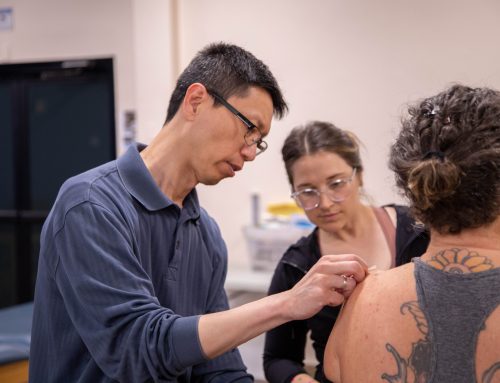
At SCU, clinical education is integrated throughout the curriculum, meaning students begin working with patients under supervision before completing all didactic coursework. By the time you graduate, the hours you have logged represent real patient contact across assessment, treatment planning, needle technique, and documentation, not simulated scenarios alone.
Herbs, Evidence, and the Science Behind the Needles
SCU’s curriculum covers classical formulas, pharmacognosy, and herb-drug interactions alongside biomedical sciences and diagnostic theory. This preparation allows graduates to work within interprofessional environments where patients may be managing both conventional and integrative care simultaneously.
According to the Bureau of Labor Statistics, employment of acupuncturists is projected to grow 17 percent from 2023 to 2033, much faster than the average for all occupations, with a median annual wage of $82,930 as of May 2023.
Programs grounded in evidence-informed practice prepare graduates to meet this demand across a range of clinical environments.
Ancient Tradition, Modern Clinic: What the Training Looks Like
Not Just Classical Theory: The Biomedical Side of Acupuncture Education
A common misconception is that acupuncture programs teach only ancient theory disconnected from contemporary healthcare. In reality, ACAHM-accredited programs integrate biomedical science, including anatomy, physiology, pathology, and pharmacology, alongside classical Chinese medicine content.
Students graduate understanding both the traditional framework of qi, meridians, and five-phase theory and the physiological mechanisms researchers have proposed to explain acupuncture’s clinical effects.
This dual training reflects what the field requires of practicing clinicians. Patients arrive with complex, often medically managed conditions. A practitioner who cannot read a lab report or recognize contraindications to needling is not prepared for modern integrative practice, regardless of their classical background.
One concrete example of this integration at scale: the Veterans Health Administration formally adopted a Whole Health model and incorporated acupuncture into VA clinical offerings, reflecting institutional demand for practitioners trained in both disciplines.
Are You Ready to Apply? How to Honestly Size Up Your Starting Point
If you are weighing whether to apply now or take additional steps first, the most useful question is whether your undergraduate science preparation is solid. Programs typically expect some background in biology, and some require anatomy or physiology specifically.
If you completed a non-science undergraduate degree or your coursework is several years old, completing prerequisite sciences before applying can strengthen both your application and your readiness for graduate-level material.
SCU’s Accelerated Health Sciences program offers a direct path to completing those sciences efficiently. For students who are academically ready, reviewing the admissions requirements for SCU’s Acupuncture and Chinese Herbal Medicine program directly is the right next step.
Graduation Is Not the Finish Line: Licensing and What Comes Next
What State Boards Want From Acupuncture Graduates
After graduating, most students must pass the NCBAHM board examinations, which cover acupuncture with point location, foundations of Oriental medicine, and biomedicine.
California operates its own licensing process through the California Acupuncture Board, which administers a separate examination and requires 3,000 supervised clinical training hours for licensure, well above the ACAHM minimum, making it one of the more demanding states for new practitioners.
Graduating from an ACAHM-accredited institution ensures your education meets the standards these licensing bodies require. Programs without that accreditation may not qualify graduates to sit for board examinations in most states, which would prevent licensure entirely.
Three to Four Years: What That Time Commitment Looks Like in Practice
Most master’s-level acupuncture programs take three to four years to complete on a full-time basis. The curriculum is dense, combining lecture-based science courses, Chinese medicine theory, clinical observation, and hands-on patient care within the same degree.
Students who enter with a strong science foundation generally find the biomedical content manageable, while those with less prior exposure may benefit from building that knowledge before they begin.
One detail most program guides leave out: licensure does not end at initial certification. NCBAHM requires diplomates to complete 60 Professional Development Activity (PDA) points every four years to maintain certification.
This means your professional development as an acupuncturist is a career-long commitment, not a one-time credential. If you want to learn more about what the path looks like from application to graduation, contact SCU’s admissions team directly to discuss your background and goals.
SCU in Action: How the Program Delivers on Its Promises
Accreditation That Opens Doors
SCU’s Acupuncture and Chinese Herbal Medicine program is accredited by the Accreditation Commission for Acupuncture and Herbal Medicine (ACAHM), the recognized programmatic accreditor for this field in the United States. This accreditation confirms that the program meets national standards for curriculum content, clinical training, faculty qualifications, and student outcomes.
SCU is also regionally accredited by the WASC Senior College and University Commission (WSCUC), which ensures the institution as a whole meets broader standards for higher education.
A Philosophy of Care Baked Into the Curriculum
SCU’s approach to health education is grounded in a whole-person philosophy which the institution has articulated in published materials. As SCU defines it, whole health addresses “not just the physical, but also the mental, spiritual, socioeconomic, relational, environmental, and systems-level factors that may be impacting a person’s health and well-being.”
This framework is embedded in how SCU’s Acupuncture and Chinese Herbal Medicine program trains students to assess and treat patients, distinguishing it from programs that treat Chinese medicine as separate from broader healthcare contexts.
Take the Next Step Toward a Career in Acupuncture and Chinese Medicine
Acupuncture degree requirements cover more ground than most prospective students initially expect: science prerequisites, hundreds of supervised clinical hours, a multi-year graduate curriculum, and a post-graduation licensing process that varies by state.
Knowing these requirements clearly puts you in a position to plan realistically, not just aspire generally.
SCU’s Acupuncture and Chinese Herbal Medicine program is built to prepare graduates for this full professional path, from foundational Chinese medicine theory through clinical training and board exam readiness.
For students who want to strengthen their science preparation before applying, SCU’s Accelerated Health Sciences offerings provide a practical option.
Explore SCU’s Acupuncture and Chinese Herbal Medicine program and take the next step toward a career in integrative healthcare.
Frequently Asked Questions
Can I apply to an acupuncture program with a non-science undergraduate degree?
Yes. Most programs do not require a science-specific undergraduate degree, but they do expect some prior science coursework, commonly one or two semesters of biology, and in some cases anatomy or physiology.
If your undergraduate background is in the humanities, business, or another non-science field, you can typically fulfill those prerequisites through post-baccalaureate coursework or an accelerated sciences program before applying.
One additional consideration for California-bound students: the California Acupuncture Board does not recognize out-of-state licensing, meaning all applicants must meet California’s own prerequisites and pass the CALE regardless of credentials earned elsewhere.
What subjects does the NCBAHM board examination test?
The NCBAHM offers four separate module examinations: Foundations of Oriental Medicine, Acupuncture with Point Location, Biomedicine, and Chinese Herbology. Most states require the first three modules for licensure; some require all four.
According to NCBAHM’s 2023 Examination Statistics Report, first-time pass rates among ACAHM graduates varied significantly by module. Foundations of Oriental Medicine had a 94.2% pass rate nationally, while Biomedicine was the most challenging at 67.9%.
Knowing which modules present the steepest learning curve lets you allocate study time more strategically. Candidates who fail a module may retake it, though retake fees apply, so targeted preparation before your first attempt is worth the investment.
What career settings do licensed acupuncturists typically work in?
Licensed acupuncturists practice across a wider range of settings than most prospective students anticipate. Private practice is the most common path, but acupuncturists also work in integrative medicine clinics, pain management centers, physical therapy offices, and hospital-based integrative health departments.
Federal employment is a growing pathway as well. The American Society of Acupuncturists actively publishes resources on Medicare, VA, and military coverage channels for acupuncturists, reflecting meaningful policy momentum toward including acupuncture in publicly funded healthcare. Some graduates also combine clinical practice with teaching roles at accredited acupuncture programs.
Is there a difference between an acupuncture license and a Chinese medicine license?
In some states, yes. Several jurisdictions issue separate license categories for acupuncture alone versus Oriental medicine or Chinese medicine, which typically includes herbal prescribing. The scope of practice attached to each license type varies by state statute.
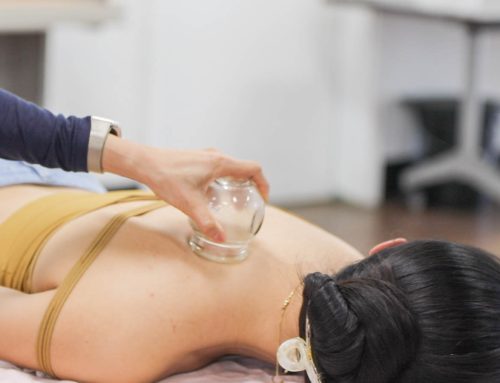
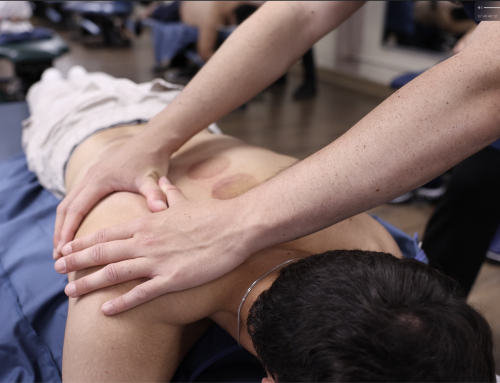
In California, the LAc. license carries one of the broadest scopes in the country. Under California Business and Professions Code 4937, licensed acupuncturists are authorized to prescribe and administer herbal remedies, dietary supplements, moxibustion, cupping, and other adjunctive therapies in addition to acupuncture itself.
This is not universal across states, so reviewing your intended state’s practice act before choosing a degree track is worth doing early.
How does acupuncture malpractice insurance work, and do I need it?
Malpractice insurance requirements vary by state, but many mandate it as a condition of licensure. California, for example, requires licensed acupuncturists to carry a minimum of $100,000 per claim and $300,000 annual aggregate in professional liability coverage, with proof submitted as part of the license application.
According to Insureon’s acupuncturist insurance data, the average malpractice premium for acupuncturists runs approximately $47 per month, or $560 annually, for standard coverage limits of $1 million per occurrence.
Even in states that do not legally mandate coverage, most employers, healthcare networks, and clinic facilities require proof of malpractice insurance before credentialing a practitioner. Building this cost into your first-year budget before you begin job searching will save you from a last-minute scramble.
What is the difference between an MAcCHM and a DAcCHM, and which should I pursue?
A Master of Acupuncture and Chinese Herbal Medicine (MAcCHM) is the standard entry-level credential for clinical practice and licensure. A Doctor of Acupuncture and Chinese Herbal Medicine (DAcCHM) is the entry-level doctoral credential that expands professional scope into research, education, and specialized clinical roles.
At SCU specifically, the DAcCHM program is structured so that students earn both the master’s and the doctoral degree upon completion, with the doctorate requiring only one additional trimester beyond the nine-term master’s program.
This structure differs from the DAOM programs, which require a completed master’s as a prerequisite before doctoral study begins. If your goal is clinical practice, the master’s remains the appropriate entry point. The doctoral credential becomes meaningful once you want to expand your professional standing or move into academic and leadership roles.
Are there professional organizations I should join as a student or new graduate?
Two organizations are worth joining early.
The American Society of Acupuncturists (ASA) is a national body that advocates for the profession at state and federal levels on issues including Medicare coverage and VA integration. Student membership is available through state associations affiliated with the ASA, often at no additional cost beyond your state dues.
The American Acupuncture and Oriental Medicine (AAAOM) is the oldest and largest national membership organization for AOM practitioners, offering continuing education access, legislative advocacy, and a professional network.
Membership in either organization as a student gives you access to professional development resources and industry updates before you enter the workforce. Some employers and credentialing bodies view active professional membership favorably, and both organizations offer discounts on malpractice insurance and continuing education that offset the cost of membership over time.
Related Posts