SCU Research Highlights the Health Benefits of Laughter Yoga for Children
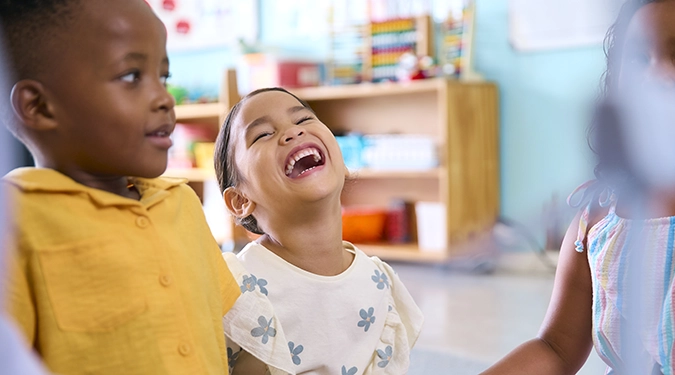
Laughter yoga is a structured mind–body practice that combines intentional laughter with breathing and gentle movement to improve children’s emotional and physical well-being.
In classrooms and pediatric settings alike, stress and anxiety among children are rising. But what if something as simple — and scientifically measurable — as laughter could help?
New research led by Southern California University of Health Sciences (SCU) Postdoctoral Fellow Dr. Özüm Erkin, PhD, MSc, suggests it can.
What Is Laughter Yoga?
Although the name might suggest something lighthearted or informal, laughter yoga follows a deliberate therapeutic framework. “Laughter yoga is not simply spontaneous laughter or humor-based activity,” explains Dr. Erkin. “It is a structured mind–body practice that integrates intentional laughter with yogic breathing, gentle movement, rhythm, and group interaction.”
While it does not include traditional yoga postures, it incorporates breath regulation and nervous system awareness — key components of integrative health.
What Does the Research Say About Laughter Yoga for Children?
Dr. Erkin co-authored a systematic review analyzing six experimental studies involving 305 school-aged children across educational and clinical settings. Here is what the analysis revealed.
Does Laughter Yoga Reduce Stress and Anxiety?
Yes, and across randomized controlled trials, laughter yoga showed statistically significant reductions in:
- Stress
- General anxiety
- Test anxiety
“What stood out most was the consistency of beneficial outcomes across disciplines and settings,” Dr. Erkin says. “Whether implemented in schools, pediatric clinical contexts, or community environments, laughter yoga demonstrated comparable reductions in stress and anxiety.”
Given rising academic pressure, digital overload, and post-pandemic mental health concerns, these findings are particularly relevant.
“Chronic stress during childhood is a significant risk factor for later mental health problems and impaired immune function,” Dr. Erkin notes.
Does Laughter Yoga Improve Physical Health in Children?
The review found improvements not only in emotional outcomes but also in physical indicators, including:
- Reduced pain
- Reduced fatigue
- Increased salivary IgA (an immune-related marker)
“Observing psychological and biological outcomes together reinforced the credibility of laughter yoga as a legitimate mind–body intervention in child health,” Dr. Erkin explains.
Physiologically, intentional laughter:
- Activates diaphragmatic breathing
- Enhances oxygenation
- Stimulates endorphin release
- Supports immune modulation
This whole-child perspective strengthens its relevance in pediatric and school health systems.
Does Laughter Alone Work, or Is the Yoga Structure Necessary?
This is one of the most practical questions for educators and parents. Short laughter exercises — such as guided breathing followed by intentional laughter before exams — can provide immediate stress relief.
However, Dr. Erkin emphasizes an important distinction:
“Although laughter itself is the core stimulus, the yoga-based framework strengthens and stabilizes its effects, making laughter yoga a replicable and teachable intervention rather than an isolated activity.”
Structured laughter yoga includes warm-up, breathing, playful interaction, and sustained laughter. This sequence promotes cumulative physiological and psychological benefits over time.
Simpler laughter exercises may help in acute situations. Structured programs build long-term resilience.
Can Laughter Yoga Be Used in Schools or Pediatric Settings?
Yes — and that is one of its greatest strengths.
Laughter yoga is:
- Non-pharmacological
- Low-cost
- Non-invasive
- Accessible to children of varying abilities
- Equipment-free
“It can be facilitated by trained professionals across disciplines, including educators, nurses, and health practitioners,” Dr. Erkin says.
Because it integrates regulatory breathing and social connection, it aligns well with Whole Health frameworks — including those emphasized at Southern California University of Health Sciences.
“This study aligns strongly with the Whole Health mission of SCU,” she explains. “My role is positioned at the intersection of integrative health research, nursing science, and population-level prevention.”
Dr. Erkin has also contributed to advancing laughter yoga within the Nursing Interventions Classification (NIC), reinforcing its legitimacy as a standardized nursing intervention.
Why Should Laughter Be Taken Seriously as a Health Intervention?
“Skepticism often arises when laughter is viewed only as entertainment rather than as a psychophysiological process,” Dr. Erkin says. “When evaluated scientifically, laughter emerges as a meaningful component of whole-child health promotion.”
Importantly, the studies reviewed reported no adverse effects — supporting laughter yoga’s safety profile.
What’s Next for Laughter Yoga Research?
Dr. Erkin’s future research priorities include:
- Larger randomized controlled trials
- Longitudinal follow-up studies
- Implementation research in schools and pediatric systems
- Digital and hybrid delivery models
She is particularly interested in how laughter-based interventions can be sustainably integrated into school health programs and community Whole Health initiatives.
Frequently Asked Questions About Laughter Yoga for Children
Is laughter yoga safe for children?
Yes. The reviewed studies reported no adverse effects, and the intervention is non-invasive and low-risk.
Does laughter yoga require yoga poses?
No. It does not include traditional yoga postures. It focuses on breathing, rhythm, gentle movement, and structured laughter.
Can teachers use short laughter exercises before exams?
Yes. Brief laughter exercises may help reduce acute stress, though structured programs may provide longer-term benefits.
How long does a laughter yoga session last?
Most structured sessions range from 20–40 minutes and include breathing, warm-up, and guided laughter phases.
Is laughter yoga evidence-based?
Yes. Multiple randomized controlled trials show statistically significant reductions in stress and anxiety in children.
Related Posts