From Reading DNA to Rewriting Life: How Genetics Is Transforming Medicine
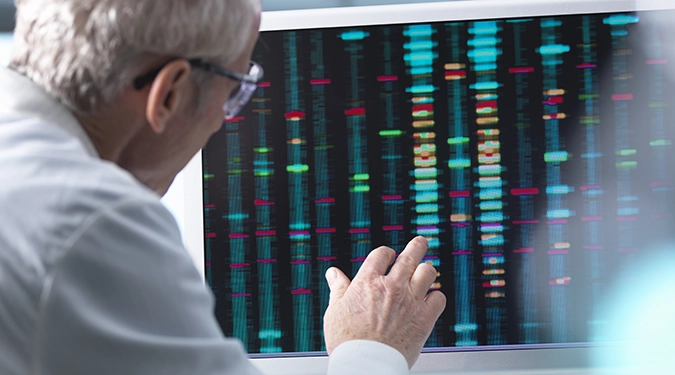
For most of modern history, medicine has focused on managing disease after it occurs. But that has begun to change. Advances in genetics and genomics are helping move healthcare toward something far more powerful: the ability to understand, predict, and in some cases directly address the biological causes of disease at their source.
To understand why this moment matters, it helps to start with the basics…
Genetics 101
Every cell in your body contains DNA, the molecule that carries the instructions for how your body grows, develops, and functions. These instructions are organized into genes—specific segments of DNA that act like individual recipes or instruction sets for making proteins, the molecules that carry out most of the body’s essential tasks. Genes influence everything from visible traits like eye color and height to less visible processes such as immune function, metabolism, and how your body responds to medications.
Even small genetic variations can increase the risk of disease—or directly cause it. For decades, scientific progress centered on identifying these variations and helping patients manage their impact. Today, we are moving beyond identifying risk toward the possibility of eliminating it at its source.
At the center of this shift is CRISPR, a gene-editing tool that allows scientists to make precise changes to DNA. Often described as a biological “find and replace” system, CRISPR can locate a specific genetic sequence, cut it at an exact point, and enable the removal, repair, or replacement of genetic material. Originally discovered as part of a bacterial defense mechanism, CRISPR has rapidly become one of the most powerful tools in modern biology.
“For the first time, we’re not just studying the genetic basis of disease—we’re beginning to intervene at that level,” says Dr. Dan Handley, Program Director of SCU’s Master’s in Genetics & Genomics program. “That fundamentally changes what’s possible in medicine.”
From Lab Innovation to Real-World Medicine
Thanks to breakthroughs like CRISPR, gene editing is beginning to reach patients. Treatments for conditions like sickle cell disease, for example, are being developed by modifying a patient’s own cells so they function properly. Similar approaches are being explored for inherited blindness, where gene therapies aim to restore vision, and for certain cancers, where a patient’s immune cells can be reprogrammed to better recognize and attack tumors. This marks a pivotal transition—from genetics as a research tool to a foundation for therapy.
Building on this momentum, medicine is becoming increasingly individualized. As our ability to read and interpret DNA improves, researchers can design treatments tailored to a single patient’s biology—particularly for rare diseases that lack standardized options. The result is a new model of care, designed around the individual rather than the statistical norm.
“As these technologies become more advanced, the human side of care becomes even more important,” says Stephanie Gandomi, Program Director of SCU’s Master’s in Genetic Counseling program. “Patients aren’t just receiving information—they are making complex, deeply personal decisions based on that information.”
This evolution is also reshaping how we think about chronic disease. Many conditions still require lifelong treatment that manages symptoms rather than addressing underlying causes. Gene-based approaches point to a different model: one-time or infrequent interventions that could permanently alter how the body regulates certain processes. Early work in areas such as cholesterol regulation offers a glimpse of what that future may look like.
From Single Genes to Complex Systems
Not all breakthroughs involve changing DNA—many are about understanding it more deeply.
New sequencing technologies can analyze longer and far more complex stretches of DNA than ever before, helping diagnose conditions that previously went unexplained for years. We now understand that conditions like cancer, heart disease, and autoimmune disorders are shaped by vast networks of genes interacting with each other and with the environment. As our ability to analyze increasingly complex genetic data grows, so does our understanding of how these diseases develop—and how they might be treated.
For patients, this means faster answers and more targeted care. For clinicians and researchers, it enables a more sophisticated view of disease.
Another promising area is epigenetics, which focuses on how genes are turned on or off. Rather than altering the DNA sequence itself, scientists can adjust gene activity—more like using a dimmer switch than flipping a switch on or off. This approach may offer a more flexible and potentially reversible path to treatment.
Beyond Medicine—and Accelerating Forward
The impact of genomics extends well beyond healthcare.
In agriculture, for example, gene-editing tools are being used to develop crops with improved nutrition, greater resilience, and fewer harmful compounds—all while maintaining productivity. Scientists are engineering drought-resistant wheat, rice varieties that can withstand flooding, and crops with enhanced vitamin content to address global nutritional gaps. At the same time, gene editing is being used to reduce allergens in foods like peanuts and to eliminate naturally occurring toxins, making the food supply safer and more accessible.
Genomics is also beginning to shape areas like environmental science and public health. Researchers are using genetic tools to track the spread of infectious diseases in real time, monitor biodiversity, and even engineer microorganisms that can help break down pollutants or capture carbon more efficiently.
Meanwhile, artificial intelligence is accelerating discoveries across the field. AI systems can analyze vast amounts of genetic data—identifying patterns that would be impossible for humans to detect and predicting how specific genetic changes may affect the body. These tools are already being used to identify new drug targets, model how diseases develop and progress, and design more precise therapies—compressing timelines that once took years into months.
Taken together, these developments reflect a larger shift: genetics is becoming a foundational technology, influencing everything from how we identify and treat disease to how we produce food, understand ecosystems, and respond to global challenges.
Preparing for What Comes Next
As genetics becomes more deeply integrated in our world, the demand for skilled professionals is growing rapidly.
Programs like SCU’s Master of Science in Genetics & Genomics prepare graduates to help identify and translate these scientific breakthroughs into real-world applications across research and clinical settings. Others, like SCU’s Master of Science in Genetic Counseling (MSGC), prepare students to help individuals and families understand their unique genetic makeup, assess potential health risks, and navigate life-changing choices with confidence.
“The pace of discovery is accelerating, but progress depends on people who know how to apply these tools responsibly,” says Dr. Handley. “Training the next generation is just as important as the technology itself.”
“Genetic information can be incredibly powerful, but it can also be overwhelming,” says Gandomi. “Genetic counselors help patients understand not just the science, but what it means for their lives and their choices.”
We are entering a moment in which DNA is no longer just something we read. It is something we can thoughtfully and precisely influence. That shift has profound implications. It changes how we think about disease, how we design treatments, and how we prepare the next generation of healthcare professionals.
Frequently Asked Questions About Genetics and Modern Medicine
What is DNA?
DNA (deoxyribonucleic acid) is the molecule that carries the genetic instructions for all living organisms, including humans, animals, and plants. It acts like a blueprint, directing how organisms grow, develop, and function.
DNA is found in nearly every cell and is organized into structures called genes. These genes influence traits such as appearance and growth, and they also affect how living organisms process nutrients, respond to their environment, and carry out essential biological processes.
What is the difference between genetics and genomics?
Genetics focuses on individual genes and how they influence specific traits or conditions. Genomics looks at all of a person’s genes together and how they interact with each other and the environment to impact overall health.
How is genetics transforming modern healthcare?
Advances in genetics are helping shift healthcare from a one-size-fits-all approach to more personalized care. By understanding a patient’s genetic profile, providers can better predict disease risk, tailor treatments, and, in some cases, address underlying causes rather than just managing symptoms.
What is precision medicine?
Precision medicine is an approach to healthcare that uses genetic, environmental, and lifestyle information to customize treatment for each patient, allowing care to be tailored to the individual rather than the average patient.
What does a genetic counselor do?
Genetic counselors help patients understand genetic testing results, assess health risks, and make informed decisions about their care. They also provide guidance and support as patients navigate complex medical and personal choices.
Are genetic treatments available today?
Some genetic-based treatments are already being used in clinical settings, particularly for rare diseases. While many therapies are still in development, the field is rapidly advancing and expanding into more areas of healthcare.
Related Posts