
Physical Therapy Programs in Southern California: Comparing Your DPT Options
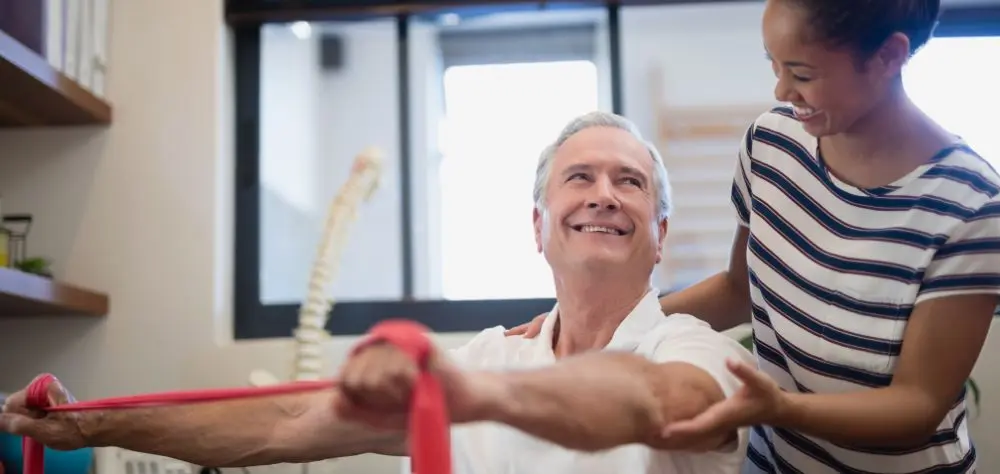
Former athletes understand movement’s mechanics instinctively—how bodies perform under pressure, where injuries originate, and what rehabilitation demands physically and mentally. This kinesthetic intelligence positions ex-athletes exceptionally well for physical therapy careers, yet choosing the right educational pathway determines whether that intuitive foundation transforms into clinical excellence.
Southern California hosts numerous Doctor of Physical Therapy programs, from established powerhouses to emerging institutions. For prospective students evaluating options, understanding what differentiates programs beyond surface credentials reveals which institutions genuinely prepare graduates for modern rehabilitation practice.
This analysis examines Southern California’s DPT landscape, clarifies what separates meaningful program quality from basic accreditation compliance, and explains why Southern California University of Health Sciences’ accelerated hybrid model represents a forward-thinking alternative for students prioritizing integrative healthcare preparation alongside geographic flexibility.
Exploring PT school options in SoCal? Discover how SCU’s two-year hybrid DPT program combines interprofessional education with clinical immersion designed for the rehabilitation field’s collaborative future.
Southern California’s Physical Therapy Education Landscape
CAPTE-Accredited Programs in the Region
Southern California hosts several respected DPT programs, each with distinct strengths and approaches:
Southern California University of Health Sciences (SCU) – SCU’s innovative 2-year hybrid DPT program represents Southern California’s most forward-thinking approach to physical therapy education. Unlike traditional residential programs requiring three years of full-time campus presence, SCU designed its accelerated format specifically for modern healthcare realities: Year one delivers online didactic instruction paired with six intensive 7-10 day campus immersions for concentrated hands-on training, while year two focuses entirely on full-time clinical rotations at partner facilities nationwide—with priority placement near students’ home communities.
As a comprehensive health sciences university housing multiple disciplines under one roof, SCU provides genuine interprofessional education through daily interaction with chiropractic, physician assistant, occupational therapy, psychology, and acupuncture students—preparing graduates for collaborative practice environments increasingly common in modern rehabilitation settings.
University of Southern California (USC) – The Division of Biokinesiology and Physical Therapy ranks among the nation’s most prestigious programs, emphasizing research enterprise and academic medical center partnerships. USC offers both residential (3-year) and hybrid pathways—though notably, the university is discontinuing its hybrid option, with the Class of 2028 as its final hybrid cohort. This shift away from flexible delivery leaves a significant gap for students seeking geographic accessibility.
University of California, San Francisco/San Francisco State University – This collaborative 3-year program admits just 50 students annually, positioning itself as the top-ranked public program on the West Coast. The highly selective, traditional residential model provides excellent training but limited accessibility for students with family or professional commitments.
Western University of Health Sciences – Located in Pomona, Western’s 3-year residential program operates within a health sciences university emphasizing interprofessional education. While Western shares SCU’s multi-disciplinary institutional structure, its traditional timeline and residential format require full relocation and extended time-to-graduation.
California State University Programs – Long Beach, Northridge, Sacramento, and Fresno offer solid 3-year residential programs through public university systems, providing accessible education for in-state students comfortable with conventional formats.
Understanding CAPTE Accreditation and Candidacy Status
The Commission on Accreditation in Physical Therapy Education (CAPTE) serves as the sole accrediting agency recognized by the U.S. Department of Education for entry-level DPT programs. Graduation from a CAPTE-accredited program constitutes the non-negotiable requirement for National Physical Therapy Examination (NPTE) eligibility.
According to CAPTE policy 3030, candidacy status is considered an accredited status. Credits and degrees earned from programs holding Candidacy status are recognized as coming from accredited programs, meaning charter class students typically qualify for licensure examination even if full accreditation comes later in the candidacy period.
Achievement of Candidacy is required before students can enroll in professional coursework. Prospective students should verify current accreditation status through CAPTE’s official directory before enrolling.
What Separates DPT Program Quality Beyond Basic Accreditation?
1. Program Duration and Format Innovation
Traditional DPT programs operate on 3-year residential models requiring full-time on-campus schedules and approximately 80% coursework alongside 20% clinical education.
Hybrid accelerated programs compress this duration through optimized instructional efficiency. SCU’s 2-year full-time hybrid format delivers a comprehensive curriculum through online synchronous and asynchronous didactic instruction, six intensive 7-10 day on-campus lab immersions during year one, and full-time clinical rotations during year two at partner facilities nationwide (when available near students’ home communities).
This structure provides geographic flexibility—students remain in current locations for most coursework—while maintaining essential hands-on training standards. For former athletes balancing family commitments or geographic ties, hybrid acceleration offers practical advantages without compromising clinical preparation.
2. Interprofessional Education Depth
Physical therapists increasingly practice within collaborative teams including physicians, occupational therapists, chiropractors, and other specialists. Yet interprofessional education implementation varies dramatically—from occasional guest lectures to genuine integrated learning experiences.
Meaningful interprofessional education requires institutional structures supporting authentic collaboration. Southern California University of Health Sciences operates as a comprehensive health sciences university housing Doctor of Physical Therapy, Doctor of Chiropractic, Master of Science: Physician Assistant, Doctor of Occupational Therapy, Doctor of Psychology, Doctor of Acupuncture & Chinese Herbal Medicine, and Master of Acupuncture & Chinese Herbal Medicine programs under one institutional mission.
This multi-disciplinary infrastructure creates natural collaboration opportunities. DPT students experience integrated coursework alongside students from other health professions, participate in interprofessional case conferences, and witness complementary clinical approaches—preparation directly applicable to hospital-based rehabilitation departments and integrative health centers.
3. Whole-Person, Integrative Healthcare Philosophy
Physical therapy’s scope extends beyond mechanical joint mobilization. The profession increasingly embraces biopsychosocial models recognizing that pain experiences, movement patterns, and rehabilitation outcomes involve complex biological, psychological, and social interactions.
Programs grounded in integrative health philosophies prepare practitioners who understand these interconnections naturally. Southern California University of Health Sciences centers its institutional mission on “whole-person health”—a values-driven approach permeating curriculum design, clinical training, and faculty scholarship.
DPT students at SCU learn anatomy, kinesiology, and therapeutic techniques within an integrative framework encouraging consideration of nutrition’s role in tissue healing, stress management’s impact on chronic pain, and psychological factors influencing rehabilitation adherence.
The SCU DPT Advantage: Key Differentiators
Accelerated Two-Year Timeline
Traditional programs span three academic years—approximately 36 months of full-time commitment. SCU’s curriculum compresses this timeline to 24 months through strategic instructional design eliminating unnecessary redundancy while maintaining comprehensive content coverage and clinical hour requirements.
For former athletes who’ve already invested four undergraduate years, two-year completion offers significant advantages: reduced tuition costs, earlier career entry and income generation, and decreased opportunity costs from delayed employment.
Online-Hybrid Delivery Model
The hybrid format solves a fundamental challenge: providing essential hands-on training while respecting students’ geographic and personal commitments.
Year one blends online didactic instruction with six intensive on-campus lab immersions at SCU’s Whittier campus. Online components deliver foundational sciences—anatomy, physiology, neuroscience, pharmacology—alongside clinical reasoning frameworks. Campus immersions provide concentrated hands-on skill development under faculty guidance.
Year two transitions to full-time clinical rotations at partner facilities, ideally located near students’ home communities when site availability permits.
Fixed-Rate Tuition Model
Educational debt represents one of healthcare professions’ most significant barriers. Traditional programs adjust tuition annually, creating financial uncertainty. SCU’s fixed-rate tuition guarantee locks rates at enrollment, providing predictable costs enabling informed financial planning.
Strategic Southern California Location
SCU’s Whittier campus positions students within the nation’s second-largest metropolitan area, offering diverse patient populations, professional networking proximity to major hospital systems, robust employment opportunities, and access to post-graduate specialization resources.
Comprehensive University Infrastructure
As a comprehensive health sciences university, SCU provides extensive library collections, academic support services, career development resources, and established clinical partnerships.
The university holds institutional accreditation from WASC Senior College and University Commission, the regional accreditor recognized by the U.S. Department of Education—indicating comprehensive educational quality beyond program-specific standards.
Practical Considerations for Prospective Students
Prerequisites and Admission Requirements
DPT programs require bachelor’s degrees with specific prerequisite coursework including Human Anatomy & Physiology (with lab), General Biology, Chemistry, Physics, Psychology, and Statistics.
SCU does not require GRE scores, removing one common application barrier. The university evaluates applicants holistically, considering GPAs, prerequisite performance, clinical observation hours, letters of recommendation, and demonstrated commitment to physical therapy.
Former athletes should emphasize their athletic backgrounds strategically—sports participation develops kinesthetic awareness, injury experience provides rehabilitation perspective, and performance under pressure demonstrates clinical practice resilience.
Application Timeline and Process
Most DPT programs use the Physical Therapist Centralized Application Service (PTCAS). Prospective students should complete prerequisite coursework with competitive GPAs (3.0+ minimum, 3.5+ preferred), accumulate clinical observation hours, identify recommenders early, and submit applications well before deadlines.
SCU’s admissions team provides individualized guidance throughout the application process.
Financial Investment and Return
DPT education represents substantial financial commitment. Two-year programs generally cost less than three-year alternatives due to reduced tuition duration.
According to Bureau of Labor Statistics data, physical therapists earned a median annual wage of $101,020 in May 2024, with top earners in specialized settings exceeding $120,000. Southern California wages typically surpass national averages.
Students should calculate realistic total costs, explore scholarship opportunities (SCU offers merit-based awards), understand federal loan programs, and consider return on investment timelines.
Beyond Graduation: Career Trajectories for Physical Therapists
Clinical Practice Settings
Licensed physical therapists work across diverse environments: outpatient orthopedic clinics, hospital acute care, inpatient rehabilitation facilities, skilled nursing facilities, home health, pediatric settings, schools, sports medicine facilities, and industrial settings.
Former athletes often gravitate toward sports medicine and orthopedic settings where their injury experience and performance understanding resonate with patient populations.
Specialization Opportunities
Board certification through the American Physical Therapy Association recognizes advanced clinical expertise in Sports Physical Therapy, Orthopedic Physical Therapy, Neurologic Physical Therapy, Pediatric Physical Therapy, Geriatric Physical Therapy, and other specialty areas.
Specialization typically requires 2,000+ hours of direct patient care plus additional coursework and examination. These credentials enhance professional credibility and often command higher compensation.
Ready to explore SCU’s innovative DPT pathway? Request detailed program information, review admission requirements, or connect with the admissions team to discuss how the accelerated hybrid format might align with your career transition goals.
Frequently Asked Questions
How many DPT programs are in Southern California?
Southern California hosts approximately 10-12 CAPTE-accredited Doctor of Physical Therapy programs, including USC, Western University, Chapman, Loma Linda, CSU Long Beach, CSU Northridge, Azusa Pacific, and Southern California University of Health Sciences.
What makes SCU’s DPT program different from traditional programs?
SCU’s program distinguishes itself through its accelerated 2-year timeline, online-hybrid delivery model providing geographic flexibility, genuine interprofessional education within a comprehensive health sciences university, whole-person health philosophy emphasizing integrative approaches, and fixed-rate tuition guarantee.
Is an online-hybrid DPT program as rigorous as traditional residential programs?
Yes. All CAPTE-accredited programs—hybrid or residential—must meet identical rigorous standards for curriculum content, clinical hours, faculty qualifications, and graduate competencies. Hybrid programs deliver content differently but cover the same material and prepare students for the same licensure examination.
Do I need a bachelor’s degree in a specific major to apply?
No. DPT programs accept students from any bachelor’s degree major provided they complete required prerequisite coursework. Common undergraduate majors include Kinesiology, Exercise Science, Biology, and Health Sciences.
Does SCU’s DPT program require GRE scores?
No. Southern California University of Health Sciences does not require GRE scores for DPT program admission, removing a common application barrier.
How much do physical therapists earn in California?
Physical therapists in California typically earn higher wages than national averages. The median annual wage nationally was $101,020 in May 2024, with experienced practitioners in specialized California settings earning well into six figures.
Can I complete clinical rotations near my home?
SCU structures its clinical network to provide year-two rotations near students’ home communities when site availability permits. While the university cannot guarantee specific geographic placements, the program prioritizes matching students with accessible facilities.
What is CAPTE Candidacy status and how does it affect licensure eligibility?
CAPTE Candidacy represents a pre-accreditation status indicating programs have met initial standards. According to CAPTE policy, Candidacy is considered an accredited status—charter class students are typically eligible for licensure examination even if full accreditation comes later, though individual state licensing boards retain final authority.