SCU Doctor of Occupational Therapy Student Rekha Todker-Sulkar Honored with Chuck Strauch Award
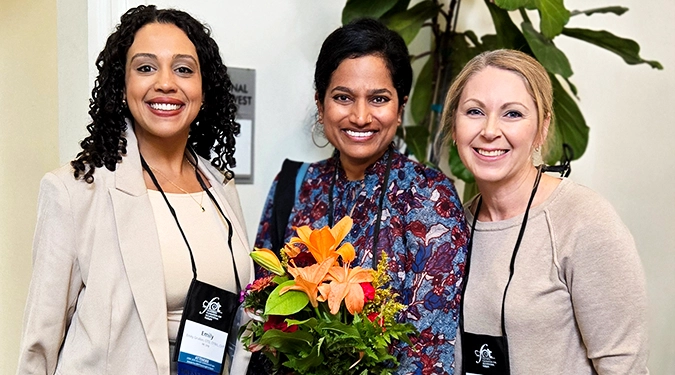
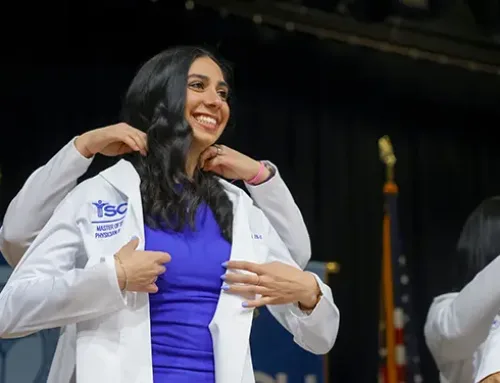
Photo: Rekha Todker-Sulkar (center) received the Chuck Strauch Award from the California Foundation for Occupational Therapy
When Rekha Todker-Sulkar, a student in the Doctor of Occupational Therapy (OTD) program at Southern California University of Health Sciences, was honored with the Chuck Strauch Award from the California Foundation for Occupational Therapy at the Occupational Therapy Association of California Conference, the moment marked far more than a professional milestone.
For Todker-Sulkar, a longtime pediatric occupational therapy assistant who returned to graduate school after years of clinical practice, the recognition represented nearly two decades of perseverance, advocacy, and purpose-driven service. Presented at the state’s occupational therapy conference, the Chuck Strauch Award honors students who exemplify leadership, scholarship, and a deep commitment to the values of the profession—qualities Todker-Sulkar has carried with her from the clinic to the classroom and beyond.
In this Q&A feature, Todker-Sulkar reflects on the significance of the award, the experiences that shaped her path to occupational therapy, and how she hopes to use this recognition to expand access to meaningful, community-centered care as she prepares for professional practice.
Q: What was going through your mind when you learned you were being honored with the Chuck Strauch Award at the OTAC Conference, and what did that moment mean to you personally as a student?
When I learned I was being honored with the Chuck Strauch Award at the OTAC Conference, I felt overwhelmed with gratitude and disbelief. As someone who began this journey eighteen years ago, this recognition felt like a deeply personal affirmation of the hard work, late nights, and the passion I’ve poured into serving children and families.
I immediately thought about the mentors who guided me, the families who trusted me, and the courage it took to return to school to pursue my OTD. Standing there in that moment, I felt seen not just for my accomplishments, but for the heart behind them. It was emotional, humbling, and incredibly motivating, reminding me why I chose this profession and strengthening my commitment to continue growing, advocating, and leading with purpose.
Q: The Chuck Strauch Award recognizes leadership, advocacy, and service to the profession. Which aspects of your academic or professional journey do you feel best reflect those values?
I believe my leadership, advocacy, and service are best reflected in the work I’ve done throughout my years as a pediatric occupational therapy assistant and in my decision to return to school to pursue my OTD degree.
In my clinical roles, I consistently advocate for children and families by creating supportive, meaningful interventions and helping caregivers understand how occupational therapy can improve their child’s daily life at home and at school.
Q: Can you share an experience—inside or outside the classroom—that helped shape your commitment to occupational therapy and confirmed this was the profession you wanted to pursue?
Nineteen years ago, when I was an undergraduate student, I volunteered at an outpatient occupational therapy clinic, and that experience shaped everything that followed.
I watched children light up with confidence after accomplishing a difficult task, and I saw the gratitude in their parents as they shared how much their child looked forward to each weekly OT session. Witnessing that combination of joy, growth, and genuine connection made it clear to me that occupational therapy was my calling.
That moment inspired me to become an Occupational Therapy Assistant, and after ten years as a COTA, I still feel the same passion and purpose I felt on that very first day in the clinic.
Q: Being recognized at a statewide conference places a spotlight on your work. How do you hope to use this recognition as you continue your education and move toward professional practice?
Being recognized at a statewide conference is incredibly meaningful, and I hope to use this moment to continue advocating for the communities I serve and for the value of occupational therapy, especially in non-traditional settings.
Through my OTD capstone project at REINS Therapeutic Riding, I’ve had the opportunity to educate and advocate for OT in a setting that many families are unfamiliar with. Most parents only associate OT with clinic-based services or school-based handwriting support, so this experience has reinforced my commitment to broadening their understanding of what our profession can offer.
As I move forward in my OTD journey, I want to continue educating families and promoting emerging areas of practice, including mental health and non-traditional, nature-based environments. I hope to develop accessible outdoor programs for autistic youth, adults, and families that support emotional regulation and meaningful participation. Most importantly, I hope this recognition helps inspire other students, COTAs, and future practitioners to pursue creative, meaningful ways of supporting emotional well-being in their own communities.
Q: Occupational therapy emphasizes meaningful participation, equity, and whole-person care. How have you tried to bring those values into your work with clients, classmates, or the broader community?
I’ve tried to bring the core values of occupational therapy—meaningful participation, equity, and whole-person care—into every setting I’ve been part of, both as a COTA and now as an OTD student.
In my clinical work, I’ve always focused on understanding each client’s strengths, interests, and cultural context so I can support participation in ways that truly matter to them and their families. During my fieldwork and doctoral capstone, I carried these values into my nature-based program by working closely with caregivers to help them understand how OT can support emotional well-being, while also providing simple, accessible strategies they could use at home, school, and in the community.
These experiences have strengthened my commitment to promoting whole-person care and expanding access to occupational therapy in ways that honor each family’s culture and goals.
Q: For other OT students who may one day aspire to this kind of recognition, what advice would you share about leadership, service, and staying grounded in the purpose of the profession?
For OT students who aspire to grow into leadership and service roles, my biggest advice is to stay humble, be respectful to the families you serve and to your peers, and always be mindful of other cultures.
Some of the most meaningful moments in my career came from listening to clients and their families, advocating for their needs, and creating opportunities for meaningful participation—whether at home, the clinic, or school. When you stay grounded in the purpose of our profession, it becomes easier to advocate for your clients and families.
If you lead with humility, cultural awareness, and respect, you’ll naturally inspire trust and build strong relationships.
Related Posts