Pre-Chiropractic Degree Requirements: Prerequisites & Experience Required

Getting familiar with pre-chiropractic requirements is one of the first steps toward launching a career in chiropractic care. Before you can apply to a Doctor of Chiropractic (DC) program, you’ll need a foundation in undergraduate coursework with a focus on life and physical sciences. These courses build the essential knowledge you’ll need for success in anatomy, physiology, and diagnostic training later on.
In addition to academic prerequisites, many programs look for applicants with relevant experience or exposure to chiropractic settings. Whether that means shadowing a licensed chiropractor or working in a healthcare environment, this kind of background can help you feel more prepared and stand out in the admissions process.
Minimum College Credits Required for Chiropractic School
Before you can begin your chiropractic education, there’s one foundational step you’ll need to complete: college coursework. Most chiropractic schools require a minimum of 90 semester credits from an accredited institution. These credits typically come from undergraduate-level studies, with an emphasis on science and general education. While every school sets its own prerequisites, this 90-credit baseline is a common entry point across the board.
The credit requirement helps ensure students are academically prepared for the rigor of chiropractic school. Courses in biology, chemistry, physics, and social sciences build the background you’ll rely on in your future studies. If you’re currently enrolled in college or have already completed some coursework, you’re likely already well on your way toward meeting this threshold.
Focus on General Education and Science Foundations
The 90 college credits required for chiropractic school are meant to provide a strong academic base, especially in the sciences. Schools generally look for coursework that demonstrates your readiness for professional health education.
Here’s the type of coursework typically expected:
- Biology with lab
- General and organic chemistry
- Physics
- Psychology or sociology
- English or communication
- Humanities or social sciences
These classes help shape your ability to understand the human body, communicate with patients, and engage with the academic side of healthcare. If you’re missing a few required courses, many schools allow you to complete them while still in the application process.
Flexible Entry and Dual-Degree Options at SCUHS
At Southern California University of Health Sciences (SCUHS), we’ve designed our Doctor of Chiropractic program to meet students where they are. If you have 90 or more qualifying undergraduate credits, you can enter our hybrid program without a completed bachelor’s degree. Through our embedded bachelor’s pathway, you can earn a Bachelor of Science in Health Sciences (BSHS) as you complete your DC—without adding time to your education.
We also offer dual-degree opportunities, including the option to earn a Doctor of Chiropractic (DC) and a Doctor of Acupuncture and Chinese Herbal Medicine (DACM). Whether you’re just shy of a degree or planning your next academic step, we make it possible to streamline your education and start your chiropractic journey with purpose and momentum.
Ready to see how your credits align with our program? Explore our program and apply today.
What Should You Study Before Chiropractic School?
If you’re considering a career in chiropractic care, one of the first decisions you’ll make is choosing a college major. While there’s no single required major for chiropractic school admission, some fields of study naturally align better with the academic and clinical demands of a Doctor of Chiropractic program.
Popular and Practical Pre-Chiropractic Majors
You have flexibility when it comes to choosing your undergraduate major. That said, many students follow similar academic paths that complement the core competencies of chiropractic education.
Some of the most common and practical pre-chiropractic majors include:
- Biology – Offers strong grounding in anatomy, physiology, and cell science
- Kinesiology – Focuses on human movement, biomechanics, and physical health
- Exercise Science – Builds understanding of body systems, rehabilitation, and performance
- Health Sciences – Covers a range of healthcare topics, ideal for interdisciplinary skills
- Psychology or Sociology – Adds insight into patient behavior and communication
Each of these majors includes coursework that directly supports the kind of knowledge you’ll need in chiropractic school and clinical practice. However, schools care more about what you’ve learned through your courses, than the specific title of your degree.
What Actually Matters to Chiropractic Programs
Chiropractic admissions teams look closely at your academic readiness. That means your GPA, the kinds of courses you’ve completed, and whether your studies have prepared you for the intensity of a DC program. Most importantly, they look for science coursework—especially biology, chemistry, and physics.
In addition to coursework, successful applicants demonstrate:
- Scientific literacy—through lab-based and evidence-driven learning
- Critical thinking—the ability to evaluate and solve real-world problems
- Strong communication skills—both written and interpersonal
Majors that support these areas will give you a solid advantage, but it’s your full academic picture that tells the story. Even if your degree is in an unexpected field, completing the required prerequisites can still make you a competitive candidate.
Choosing a Major That Works for You
When deciding on a pre-chiropractic major, it helps to choose something that interests you, aligns with your strengths, and supports your future goals. If you enjoy science, movement, or health, you’re likely on the right track. But don’t feel boxed in, as students come into chiropractic programs from a wide range of backgrounds.
What’s most important is that your major gives you the academic tools and habits that will help you succeed in professional school. Think of it as your launching pad and as something that prepares you for a more focused, hands-on, and clinically rich educational journey ahead.
Experience That Strengthens Your Application (Beyond Grades)
Strong academic performance is important, but it’s only one part of what makes a chiropractic school application stand out. Admissions committees look for students who bring curiosity, compassion, and a genuine interest in healthcare. Gaining experience before you apply shows that you understand the profession and that you’re ready for the hands-on nature of chiropractic care.
The right experiences can also help you connect classroom learning to real-world situations. They give you talking points for your personal statement, material for recommendations, and a better sense of what kind of chiropractor you want to become. If you’re wondering where to start, there are several meaningful ways to get involved.
Experiences That Can Strengthen Your Application
- Shadow a licensed chiropractor. Spend time in a clinic to understand patient care, daily responsibilities, and professional communication.
- Volunteer in a healthcare or wellness setting. Hospitals, rehabilitation centers, or community wellness events can help you gain perspective on patient interaction and teamwork.
- Get relevant work experience. Jobs such as personal trainer, massage therapist, physical therapy assistant, or EMT all build transferable skills.
- Request thoughtful letters of recommendation. Ask professors, healthcare professionals, or mentors who can speak to your character, motivation, and reliability.
- Craft a meaningful personal statement. Use it to share your purpose, experiences, and alignment with chiropractic values like whole-person wellness and natural healing.
When your experiences connect naturally with your academic background, they help tell a complete story. Admissions teams appreciate applicants who show growth, purpose, and curiosity about their chosen profession. The more you can demonstrate genuine engagement (through shadowing, volunteering, or related work) the clearer your commitment becomes.
If you start exploring these opportunities early, you’ll build confidence before chiropractic school even begins. You’ll also enter the program with real-world insight that helps you connect what you learn in class to how you’ll apply it in patient care later on.
SCUHS Makes It Easier to Start Your Chiropractic Journey
At Southern California University of Health Sciences (SCUHS), we’ve created a more accessible entry point for students ready to begin their chiropractic journey. If you have 90 or more undergraduate credits, you can start our Doctor of Chiropractic (DC) program—without needing a completed bachelor’s degree. That means less waiting, more momentum, and a direct path toward a meaningful career in healthcare.
We’ve built this option with flexibility and efficiency in mind. You won’t need to backtrack to finish your bachelor’s first. Instead, you can move forward with your DC while earning a Bachelor of Science in Health Sciences (BSHS) along the way.
Dual Degrees and Real Career Preparation
Earning your DC at SCUHS also comes with opportunities to personalize your education and prepare for real-world success. Alongside your core chiropractic training, you’ll explore embedded business coursework that covers practice development, billing, legal essentials, and patient management, all practical tools that help you thrive beyond graduation.
We also offer elective paths in:
- Sports Medicine
- Functional Medicine
- Eastern Medicine
- Advanced Chiropractic Techniques
You can even pursue a dual-doctorate pathway, earning both your DC and a Doctor of Acupuncture and Chinese Herbal Medicine (DACM). It’s a powerful way to expand your clinical skillset and offer more to future patients all while staying on a single, thoughtfully designed academic track.
Two Campuses. One Flexible, Hybrid Format
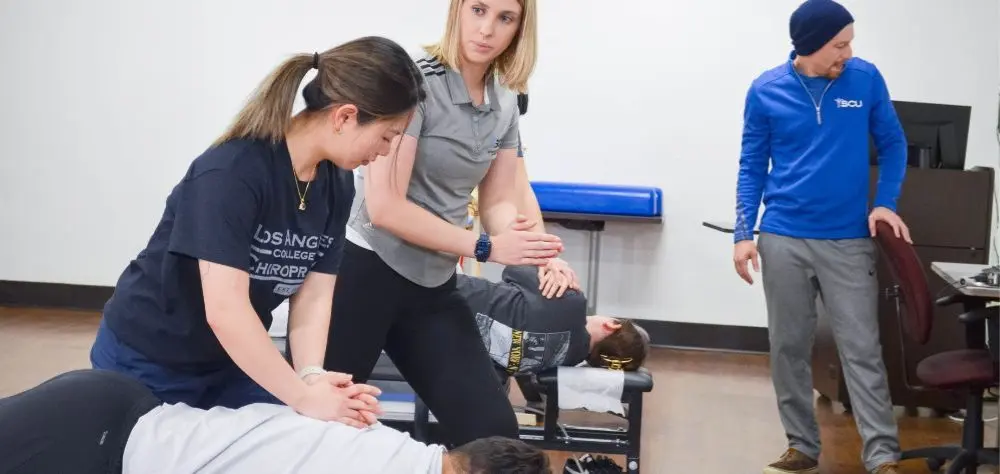
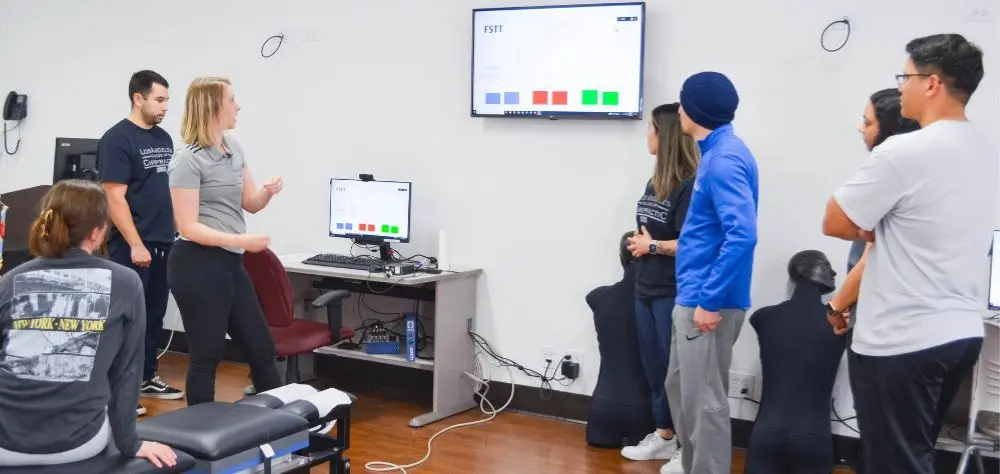
Whether you’re closer to Southern California or Arizona, you’ll have access to the same high-quality education through our hybrid format. Coursework is delivered online through live, interactive sessions, and you’ll participate in on-campus residencies every few weeks, spending 3–5 days building hands-on clinical and diagnostic skills.
Our format is designed to support your busy lifestyle while delivering all the academic and clinical rigor you’d expect from a leading chiropractic institution. It’s ideal for students managing work, family, or living in areas where daily campus attendance isn’t realistic.
Take the First Step Toward Your Chiropractic Future
SCUHS gives you the opportunity to begin your chiropractic career with more flexibility and less delay. With no bachelor’s degree required to get started, an embedded BSHS track, and a hybrid format that supports your lifestyle, our program is designed to help you move forward—wherever you’re starting from. You’ll receive a strong academic foundation, real-world clinical experience, and options to specialize through electives or dual-degree pathways.
Whether you’re finishing college credits or ready to dive into a career shift, our approach makes it easier to begin with confidence. Apply now to start your journey at SCUHS.
FAQs
What are the basic pre chiropractic requirements before applying to a Doctor of Chiropractic program?
Most chiropractic programs require around 90 semester hours of college credit from an accredited institution, including courses in biology, chemistry, and physics. Strong communication and social science courses are also valuable. These requirements ensure you’re prepared for the rigorous coursework in anatomy, physiology, and patient care that follows once you begin your chiropractic education.
Do chiropractic schools require a specific undergraduate major?
No specific major is required, but degrees in biology, kinesiology, exercise science, or health sciences are popular because they cover essential science prerequisites. The most important factor is completing the correct coursework and developing the critical thinking and scientific literacy needed for a healthcare program. Choose a major that interests you and aligns with your strengths.
Does SCUHS accept students without a completed bachelor’s degree?
Yes, we do. Students who have 90 or more qualifying undergraduate credits can enter our Doctor of Chiropractic program without a completed bachelor’s degree. Through our embedded bachelor’s track, you can earn a Bachelor of Science in Health Sciences (BSHS) while completing your chiropractic degree, with no added time or extra semesters required.
What kinds of electives or specialized tracks are available in the SCUHS chiropractic program?
Students can customize their education with electives in Sports Medicine, Functional Medicine, Eastern Medicine, Chiropractic Techniques, and Business Development. We also offer a dual-degree pathway, allowing you to earn both a Doctor of Chiropractic (DC) and a Doctor of Acupuncture and Chinese Herbal Medicine (DACM).
What kind of experience helps strengthen a chiropractic school application?
Gaining hands-on or related healthcare experience can make your application more competitive. Shadowing a chiropractor, volunteering in a clinic, or working in roles like personal training, massage therapy, or as an EMT can all demonstrate your understanding of patient care and commitment to the field. These experiences also give you insight into the day-to-day responsibilities of a chiropractor.
Related Posts