Chiropractic Schools in Arizona: Programs, Costs & Admissions
Choosing from available chiropractic schools in Arizona is a major step toward building a rewarding, hands-on career in healthcare. With Arizona’s growing demand for holistic and non-invasive care, the region is now gaining more accessible options for students interested in chiropractic education. Whether you’re just starting your academic journey or looking to shift careers, understanding your options—and how they align with your goals—is key.
At Southern California University of Health Sciences (SCUHS), we’re proud to offer Arizona’s first Doctor of Chiropractic program, designed to fit the lives of today’s students. With flexible online learning, scheduled in-person clinical training, and a campus in the Phoenix Metro area, we’ve built a program that meets the state’s growing need for chiropractors, all while helping students move forward with purpose and confidence.
Arizona’s Growth Is Creating Space for More Healthcare Careers
Arizona’s population continues to grow at a remarkable pace. With new residents arriving from across the country, the state is experiencing steady increases in housing development, job opportunities, and demand for healthcare services. Among the growing list of healthcare needs, chiropractic care stands out. People across Arizona are seeking more natural, movement-focused options for managing pain and improving overall wellness, and that means the state needs more chiropractors.
But for a long time, Arizona’s education system didn’t reflect that need. Students interested in becoming chiropractors have had limited options within the state. Until recently, those who wanted to pursue a Doctor of Chiropractic degree had to look elsewhere.
And that relocation impacts more than tuition. It involves:
- Housing and travel expenses
- Leaving behind family or work commitments
- Losing connections to the Arizona healthcare community
- Higher risk of students not returning to practice in-state
Without local access to chiropractic education, Arizona’s healthcare system has faced a slower pipeline of trained chiropractors entering the workforce. This has made it harder for some communities—especially outside of metro areas—to access care. The good news is: that gap is beginning to close.
What to Expect From a Doctor of Chiropractic (DC) Program
Enrolling in a Doctor of Chiropractic (DC) program means preparing for a full-time, graduate-level education that usually lasts 3 to 4 years. The program is structured to guide students through academic knowledge, hands-on technique, clinical training, and licensure preparation. Each phase is designed to support your development into a confident, competent healthcare provider.
Students complete rigorous coursework and clinical experiences aligned with national standards set by the Council on Chiropractic Education (CCE). From your first anatomy course to your final patient case in clinic, you’ll learn to assess, treat, and care for patients using evidence-informed chiropractic methods. It’s a comprehensive, engaging process that prepares you for real practice, and it all starts with a strong foundation.
What’s Included in a Doctor of Chiropractic Program
DC programs are built to help you become clinically skilled, diagnostically sharp, and professionally ready. Here are the main components of what you’ll study and experience:
- Basic Sciences: Anatomy, physiology, pathology, and biochemistry
- Clinical Sciences: Neurology, orthopedics, nutrition, and differential diagnosis
- Chiropractic Technique: Hands-on adjusting methods, biomechanics, and functional assessment
- Radiology and Diagnosis: X-ray interpretation and diagnostic imaging
- Patient Care and Communication: Clinical reasoning, ethics, and documentation
- Internships/Residencies: Supervised clinical rotations with real patients
- Licensure Preparation: Courses and assessments aligned with NBCE board exams
Each course and clinical experience builds on the next, giving you the tools you need to diagnose conditions, develop treatment plans, and care for diverse patient populations.
From Classroom to Clinic: Your Progression Through the Program
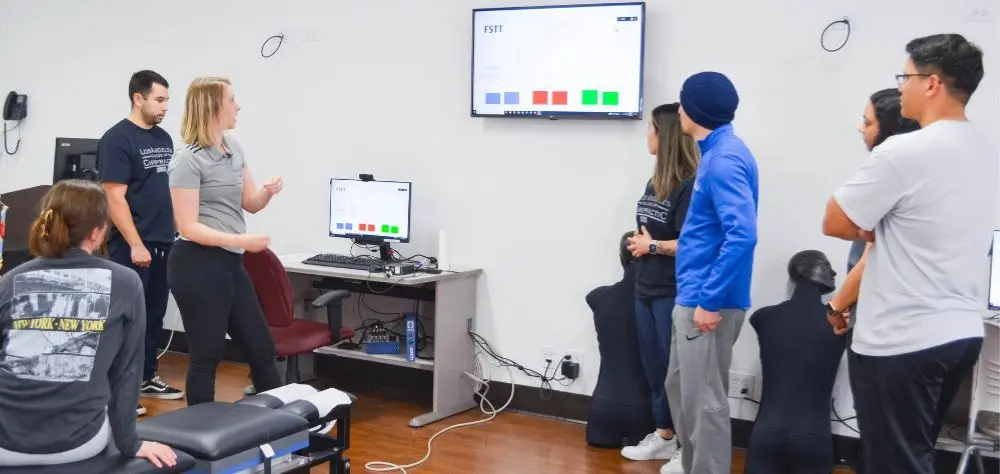
DC programs follow a structured sequence, usually beginning with didactic (classroom-based) instruction before moving into labs, technique classes, and eventually supervised clinical work. In the early stages, you’ll build your scientific foundation, studying human biology, pathology, and the systems of the body. You’ll also begin practicing manual techniques in a lab setting, learning how to palpate, assess, and adjust the spine and joints.
As you move into the later stages of the program, clinical internships become the focus. You’ll work directly with patients, take medical histories, perform exams, and provide care all under licensed supervision. These rotations are where you apply what you’ve learned, build confidence, and prepare for practice.
Preparing for Licensure: What It Takes
Becoming a licensed chiropractor requires passing the National Board of Chiropractic Examiners (NBCE) exams, which are taken in four parts during your time in the program. These exams assess your understanding of both basic sciences and clinical practice. Your DC program will integrate exam preparation into your coursework, helping you build familiarity with test formats and expectations.
Each state also has its own licensing requirements, which may include jurisprudence exams or background checks. The CCE accreditation standards ensure that your education prepares you for these requirements, so choosing an accredited program is essential. You can review the CCE’s standards here. Staying informed and organized during your program makes this final step more manageable.
SCUHS: Arizona’s First Hybrid Doctor of Chiropractic Program
At Southern California University of Health Sciences (SCUHS), we’ve always believed in leading with innovation. For more than a century, we’ve been at the forefront of chiropractic education. In 2026, we’re proud to extend that leadership to the Phoenix Metro area with Arizona’s first hybrid Doctor of Chiropractic program. This program is designed for students who want local access, real-world training, and flexibility built into every step of the experience.
Whether you’re living in Arizona and searching for a nearby program, changing careers, or balancing education with work and family responsibilities, we’ve created a structure that helps you move forward without compromise. With live, online coursework and short, scheduled in-person residencies, our hybrid format lets you stay connected to your community while building your chiropractic future.
Built for Balance, Designed for Impact
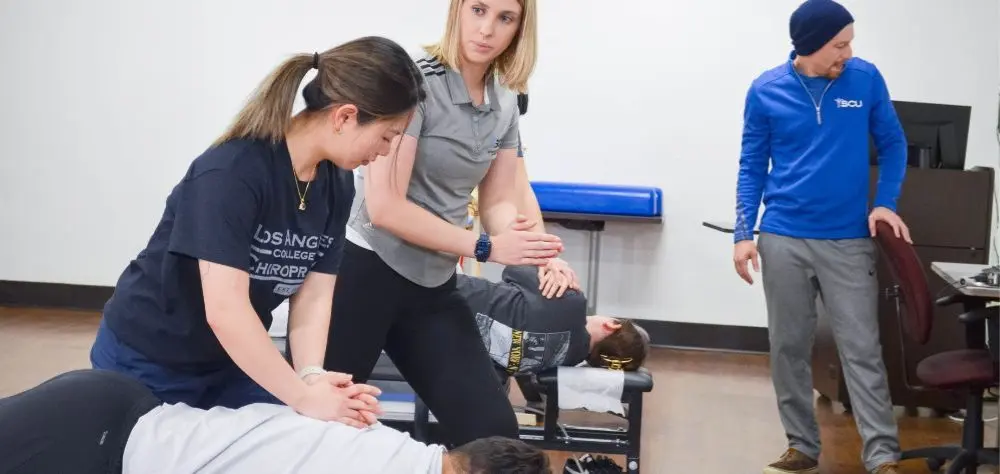
Our hybrid DC program combines academic rigor with accessibility. Students attend live, online classes during the week and participate in on-campus clinical intensives every few weeks. These 3–5 day residencies are focused on developing diagnostic skills, chiropractic technique, and patient care, all in a hands-on, small-group setting.
Here’s what makes our program a great fit for today’s students:
- Enter with 90+ college credits—a bachelor’s degree isn’t required to start
- Earn your BSHS degree while completing your DC, with no added time
- Gain real-world experience through our SCU Health Clinics and clinical partner sites
- Learn from a curriculum grounded in evidence-based practice and clinical research
- Choose electives and specialty paths that match your goals—like sports medicine, functional medicine, and more
Real-World Training, Right in Your Community
A cornerstone of our program is hands-on clinical education, and we’ve ensured it’s woven throughout the student journey. Arizona students will complete rotations at SCU Health Clinics in the Phoenix area, treating real patients under licensed supervision. These clinics are open to the public, accept insurance, and welcome thousands of visits annually, giving students exposure to a diverse patient population.
After this core training, students can expand their clinical skills at one of our 500+ affiliated partner sites. These include private practices, hospitals, integrated health centers, and athletic programs, offering opportunities to explore different settings and specialties before graduation. From day one, our goal is to prepare you for the realities of modern chiropractic care.
Regional Chiropractic Schools: Other Options for Arizona Applicants
Before the SCUHS program, Arizona students interested in chiropractic careers typically had to relocate to pursue their education. With no accredited Doctor of Chiropractic programs operating within Arizona for years, many prospective chiropractors looked to nearby states for their degrees. These schools have helped shape many great practitioners and continue to be popular choices, especially for those who value traditional, in-person formats or who already have ties to those regions.
Common Out-of-State Chiropractic Schools for Arizona Students
These programs are often considered by Arizona residents:
- Palmer College of Chiropractic – West Campus (San Jose, CA)
A longstanding and respected program with a traditional campus experience and strong alumni network on the West Coast. - Life Chiropractic College West (Hayward, CA)
Known for its focus on chiropractic philosophy and technique, Life West appeals to students seeking a principle-centered education. - Parker University (Dallas, TX)
Offers a blend of traditional and contemporary training, with an emphasis on chiropractic business and entrepreneurship. - Logan University (Chesterfield, MO)
Recognized for its integrative health approach and advanced diagnostic curriculum, Logan also offers options for dual-degree pathways.
While these programs offer robust education, students often face challenges related to relocation, especially when it comes to housing, out-of-state tuition, and building a local network in a new community.
What to Consider with Out-of-State Chiropractic Schools
Relocating to another state for chiropractic school is a major decision, and while it opens up more choices, it also brings some real considerations.
- Relocation and housing costs, which can significantly increase the total investment
- Tuition variability, with some institutions charging higher rates for non-residents
- Limited connections to local Arizona healthcare networks, which can affect internships and job placement
- Time away from family and support systems, especially for career-changers or students with dependents
- Licensing prep across state lines, if you’re training elsewhere but planning to practice in Arizona
For some students, these challenges are worth the experience. For others, the desire to stay closer to home and build roots within Arizona’s healthcare system becomes a top priority.
Why Many Arizona Students Are Choosing SCUHS
With the launch of our hybrid Doctor of Chiropractic program in Tempe starting January 2026, SCUHS now offers Arizona students an in-state option that blends national-quality education with local access. Our program combines live online instruction with scheduled in-person clinical residencies, designed to fit your lifestyle and eliminate the need for permanent relocation.
You can earn your degree close to home, build professional connections in Arizona, and still benefit from the innovation and academic rigor that SCUHS has delivered for more than 110 years. If you’re looking for a path that keeps you rooted while moving you forward, we’re ready to welcome you.
Admissions Requirements: What You’ll Need to Apply
Applying to a chiropractic program starts with understanding the baseline academic requirements. Most schools require students to have completed at least 90 semester credits from an accredited institution. These credits typically come from undergraduate coursework and should reflect a well-rounded academic foundation.
A minimum GPA of 2.5 to 3.0 is commonly expected, though some programs may be flexible depending on your full application profile. Beyond GPA, admissions teams want to see that you’ve completed specific recommended courses to ensure you’re prepared for the curriculum ahead.
Common Prerequisites for Chiropractic School
Here’s a snapshot of what programs generally expect:
- 90+ semester credits from an accredited college or university
- Recommended coursework:
- Biology
- General and organic chemistry
- Physics
- English composition
- Psychology or social science
- GPA: 2.5 minimum, though 3.0 or higher is more competitive
- Transcripts from all prior institutions attended
Most programs welcome applicants from a variety of undergraduate majors. What matters most is whether your academic background supports success in a rigorous, science-based professional program.
How to Strengthen Your Application Further
While academic qualifications are critical, many schools also consider the overall strength of your application, including what you bring to the program outside of your GPA and transcripts. Admissions committees are looking for future doctors who are motivated, thoughtful, and passionate about helping others.
- Shadowing a chiropractor or volunteering in a healthcare setting
- Letters of recommendation from professors or professionals in the field
- A personal statement that explains your “why” and how chiropractic fits into your career goals
- Work experience in fitness, health, or wellness
- Community involvement that demonstrates leadership or service
What Chiropractic Programs in Arizona Will Likely Cost You
Cost is an important part of the decision-making process. Understanding what goes into the price of a chiropractic education can help you better evaluate your options. While tuition often draws the most attention, there are multiple other components that make up your total
Typical Expenses to Consider
- Tuition and required university fees
- Books and course materials
- Lab and clinical supplies
- Travel and housing for in-person residencies (especially in hybrid programs)
- Transportation and parking
- Licensing exam fees (NBCE Parts I–IV and state board exams)
- Equipment such as adjusting tools or anatomical models (in some programs)
Some of these costs are one-time expenses, while others repeat each term. It’s worth budgeting ahead to make sure you’re fully prepared for the financial side of your education.
How to Evaluate Cost vs. Value in Chiropractic Education
Chiropractic school is a significant investment, and choosing the right program goes beyond looking at sticker price alone. A higher tuition may include greater access to clinical opportunities, more advanced technology, or stronger alumni support. Meanwhile, some programs offer accelerated tracks or embedded degrees that reduce overall time and cost.
Here’s what to consider when weighing cost and value:
- Length of the program and number of required credits
- Access to clinical placements and community exposure
- Flexibility of course delivery (online/hybrid options)
- Built-in degree pathways (BS + DC, for example)
- Career services and job placement rates
- Institutional reputation and accreditation
Evaluating the total return on investment helps you make a smarter, more informed choice.
Make Your Move Toward a Meaningful Future
Chiropractic education is a big decision, and understanding what’s required helps you move with confidence. From minimum college credits and recommended coursework to personal experiences that strengthen your application, each step plays a role in shaping your readiness. And while chiropractic schools in Arizona have historically been limited, the landscape is expanding, creating more pathways for in-state students to pursue meaningful careers without uprooting their lives.
If you’re ready to start the process, we’re here to support you. At SCUHS, we’ve designed a hybrid Doctor of Chiropractic program that makes your goals more accessible than ever—flexible, hands-on, and focused on the future. Apply today and take your first step toward becoming a chiropractor with SCUHS.
FAQs
What are the admission requirements for most chiropractic schools in Arizona?
Most chiropractic programs in Arizona require at least 90 semester credits from an accredited college, a GPA around 2.5–3.0, and foundational science courses like biology, chemistry, and physics. Some schools also recommend coursework in psychology and English. While a bachelor’s degree isn’t always required to apply, completing one can help strengthen your application and make you a more competitive candidate.
Does SCUHS offer a chiropractic program in Arizona?
Yes, we do. At Southern California University of Health Sciences (SCUHS), we’re proud to offer Arizona’s first hybrid Doctor of Chiropractic program at our Phoenix Metro campus. We’ve designed this program with flexibility in mind, combining online coursework with scheduled in-person clinical training.
Can I apply to SCUHS without a bachelor’s degree?
Absolutely. At SCUHS, students can enter the program with 90 or more qualifying college credits. What’s more, you can earn your Bachelor of Science in Health Sciences (BSHS) along the way, without adding time to your overall education. It’s a smart, efficient path for students who are ready to get started but still want to finish their undergraduate degree.
What makes chiropractic schools in Arizona a good choice for local students?
Studying in-state means students avoid relocation costs, maintain local support systems, and build professional connections within Arizona’s healthcare community. With the demand for chiropractors growing across the state, attending school locally can position graduates for stronger job placement and allow them to contribute directly to the communities they already know and love.
When can I apply to SCUHS’s hybrid DC program in Arizona?
Our Phoenix Metro hybrid program officially opens in January 2026, and applications will open in advance of that date. We encourage prospective students to reach out early to our admissions team, gather transcripts, and begin preparing application materials now. We’re excited to welcome students who are ready for a flexible, future-focused path in chiropractic.
Related Posts