Top OTD Programs in the US: What Sets Them Apart
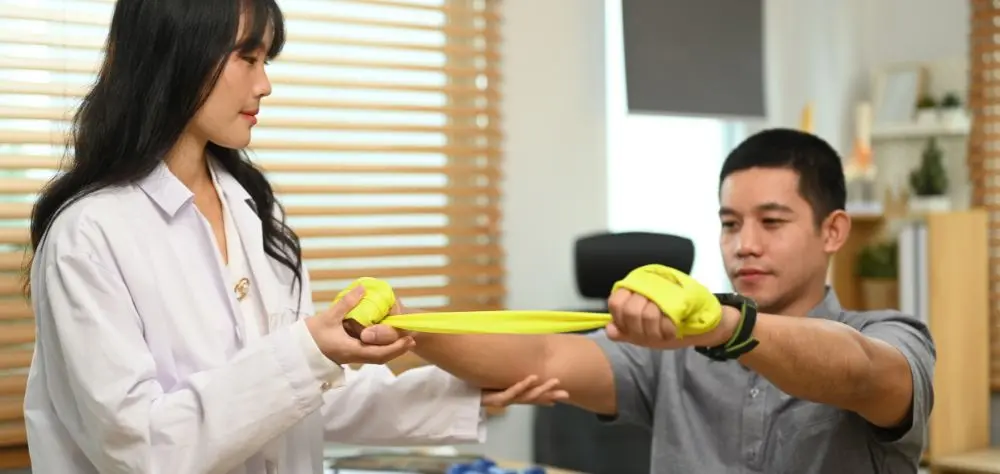
Occupational therapy is evolving quickly and with purpose. The top OTD programs in the United States are leading that shift, training practitioners to meet rising demand in healthcare, education, and community-based settings. These programs combine clinical excellence with advanced training in leadership, systems change, and evidence-based practice, helping graduates step confidently into a range of high-impact roles.
Whether you’re already in the field or exploring a new path in allied health, the right OTD program can shape your career in meaningful ways. From hybrid formats that support flexibility to clinical placements designed for real-world learning, knowing what defines a high-quality program can help you move forward with clarity and purpose.
What Actually Differentiates Top OTD Programs?
Choosing an occupational therapy doctorate isn’t just about checking boxes. Top OTD programs are designed to develop your clinical skill set while preparing you for broader impact across healthcare, education, and community systems. If you’re considering a doctoral path in OT, understanding the structure and support behind strong programs can help you move forward with clarity.
Accreditation, Licensure Preparation, and Certification Support
Every OTD program must be accredited by the Accreditation Council for Occupational Therapy Education (ACOTE) in order for graduates to sit for the NBCOT board exam. But top programs go further: they integrate board exam preparation into the curriculum, offer consistent performance tracking, and help students pursue state licensure with confidence.
Look for these indicators of a high-support licensure path:
- ACOTE accreditation status
- NBCOT board pass rate trends
- Built-in board prep within coursework
- Post-grad support through licensure and employment transitions
Flexible Format and Online Learning Options
Working students and career changers benefit from hybrid OTD programs that combine online coursework with periodic hands-on labs. This model supports different lifestyles while still maintaining rigorous standards. The best programs invest in digital learning technology and provide live, interactive sessions for real-time engagement with faculty and peers.
A flexible format doesn’t mean sacrificing depth. These programs often include weekly synchronous instruction, self-paced content, and well-organized campus labs, along with clinical placements that can often be arranged near your home region.
Clinical Rotations That Align with Real-World Practice
Fieldwork is the heart of occupational therapy education. High-quality OTD programs build structured clinical rotations into their curriculum, exposing students to diverse patient populations and practice settings—from acute care hospitals to school-based systems, skilled nursing, and mental health clinics.
Capstone Design, Mentorship, and Scholarly Development
Capstone projects give students the opportunity to dive deeper into an area of interest and develop leadership, research, or program development skills. In top programs, these projects are paired with dedicated mentorship and clear outcomes.
Whether your interests lean toward advocacy, education, innovation, or direct care delivery, your capstone should reflect the field’s evolving demands while helping you shape a career path grounded in personal purpose.
Inclusive Pathways and Support for Non-Traditional Students
Leading programs are increasingly building access routes that support career changers, adult learners, and licensed Occupational Therapy Assistants (OTAs). This includes entry without a bachelor’s degree, as long as students have a qualifying number of college credits—alongside embedded bachelor-to-doctorate structures that streamline time and cost.
Top 6 OTD Programs in the United States
Doctoral programs in occupational therapy are growing in scope, specialization, and accessibility. From hybrid formats to research-intensive tracks, today’s leading OTD programs are designed for aspiring clinicians, educators, and leaders who want to move the field forward. These programs combine strong academic preparation with mentorship, clinical rotations, and career-ready credentials.
1. Southern California University of Health Sciences (SCU) – Hybrid, Accelerated, and Purpose-Built
We developed our hybrid Doctor of Occupational Therapy (OTD) program for learners who want to move forward with purpose. Our program allows students with 90 or more qualifying undergraduate credits to enter directly—no bachelor’s degree or GRE required—and complete both a Bachelor of Science in Health Sciences (BSHS) and a Doctor of Occupational Therapy in just over two years. This embedded dual-degree structure saves time, reduces tuition costs, and supports earlier entry into clinical and leadership roles in the OT field.
You’ll begin with live online coursework guided by expert faculty, with three short, in-person campus visits per year for immersive lab-based learning. In your second year, you’ll complete clinical rotations tailored to your interests and location—either near your home or at one of our partner sites across the country. You’ll also complete a capstone project that aligns with your career goals, whether that’s in pediatrics, neurorehabilitation, mental health, or emerging areas of practice.
Program Highlights:
- Entry for students with 90+ college credits—no bachelor’s or GRE required
- Simultaneous BSHS + OTD completion in 2 years and 3 months
- Live, synchronous online learning + 3 immersive campus weekends per year
- Clinical placements in your home region or other U.S. locations (subject to availability)
- Embedded preparation for PAM certification and Lifestyle Medicine credentials
- Fully ACOTE-accredited; prepares you to sit for the NBCOT exam
- Fixed tuition guarantee, financial aid for those who qualify, and institutional scholarship opportunities
We welcome students from all walks of life, whether you’re an OTA ready to grow, a transfer student reentering your educational path, or a career changer with a health sciences background. If you’re ready to step confidently into a flexible, career-focused program designed for real-world impact, we invite you to begin your application today or request more information.
2. University of Pittsburgh
As a top research university, Pitt offers one of the most respected OTD programs in the country. Students have the opportunity to pursue dual tracks, including a combined OTD/PhD option. The curriculum includes early fieldwork, strong clinical affiliations, and interprofessional experiences that bridge clinical and academic training. The program also houses research centers focused on global health, rehabilitation engineering, and assistive technology development.
3. Washington University in St. Louis
Known for its innovation in evidence-based OT practice, Washington University offers a rich doctoral experience that blends rigorous academics with high-impact mentorship. Students benefit from personalized capstone design and extensive faculty support. The program is housed in a leading medical and research environment, giving students direct access to tools, knowledge, and interdisciplinary learning. Emphasis is placed on translational research and customized clinical education.
4. Boston University
Boston University’s post-professional online OTD is designed for licensed occupational therapists seeking leadership roles. The program blends academic theory with workplace innovation, and students complete a capstone project that reflects their current practice or career goals. The curriculum focuses on systems-level thinking, advocacy, and scalable impact in both local and global settings.
5. University of St. Augustine for Health Sciences
This Flex OTD program supports working professionals through a hybrid format with weekend intensives and online learning. The curriculum includes business and leadership coursework in addition to core clinical knowledge. Students complete rotations in diverse settings and benefit from a national network of clinical partners. The program is known for its flexibility and breadth, with strong support for students balancing career and education.
6. Thomas Jefferson University
Thomas Jefferson’s OTD programs offer both on-campus and hybrid options, serving a wide variety of students. Known for a strong focus on community health and health equity, the curriculum prepares graduates to work in urban settings and emerging practice areas. Capstone opportunities include leadership, teaching, public health, and interdisciplinary collaboration. Early fieldwork exposure and strong faculty mentorship enhance the program’s depth and reach.
Skills That Set You Up for Success in an OTD Program
Occupational Therapy is a human-centered profession, grounded in science but delivered through real-world interactions. Success in an OTD program requires more than just academic readiness, it also calls for personal habits and professional traits that support consistent progress and long-term growth. Whether you’re coming from an OTA background or starting a new health career, developing a few key skills early will help you get the most from your training.
Core Skills to Build:
- Emotional intelligence and empathy – Crucial for building rapport with patients, understanding diverse perspectives, and navigating complex clinical dynamics.
- Time management – Especially important in hybrid or accelerated programs, where students juggle online coursework, in-person labs, and clinical rotations.
- Clinical reasoning – You’ll learn to connect evidence with observation and make treatment decisions that improve function and quality of life.
- Communication – Writing clear documentation and engaging effectively with patients, faculty, and supervisors will be a daily part of your work.
- Research literacy – From reading clinical studies to completing a capstone, you’ll need to interpret data and apply it meaningfully.
Top OTD programs are designed to support your development in all these areas—but arriving with a growth mindset, curiosity, and a sense of professional purpose will take you even further. The more you invest in your own learning process, the more you’ll gain from the experience.
Ready to Train at the Highest Level?
The most effective occupational therapy programs are those that align advanced clinical training with your personal vision, academic goals, and future leadership potential. Top OTD programs prioritize evidence-based learning, immersive clinical training, and hands-on mentorship, giving you the tools to grow into a confident, competent, and compassionate healthcare provider.
Whether you’re transitioning from an OTA role, returning to school, or exploring new possibilities in healthcare, there’s a program structure that fits your life. If you’re ready to take the next step toward doctoral training with support, flexibility, and purpose—now is the time to act. Explore our program and request more information.
FAQs
How long does it take to complete SCU’s Doctor of Occupational Therapy program?
SCU’s full-time OTD program is 7.5 terms, approximately two and a half years, totaling 101 credit hours. While many OTD programs across the country take around 3 years, SCU’s curriculum is designed to get you into practice faster, without sacrificing depth or clinical preparation. All degree requirements must be completed within 5 years of matriculation.
Does SCU’s OTD program require the GRE?
No. SCU does not require the GRE for admission to the OTD program. Instead, SCU uses a holistic admissions process that considers your academic history, personal traits, professional experience, and background — giving students with a wide variety of strengths the opportunity to be considered.
Can I apply to SCU’s OTD program without a bachelor’s degree?
Yes. If you have completed a minimum of 90 undergraduate credit hours from an accredited institution, you may apply directly to the OTD program. SCU also offers an embedded Bachelor of Science in Health Sciences option, allowing eligible students to earn both their bachelor’s and doctoral degrees concurrently — with no added time to the program.
Is SCU’s OTD program a good fit for current Occupational Therapy Assistants?
Yes. Current OTAs are encouraged to apply, and SCU offers a dedicated OTA to OTD Bridge pathway that allows OTAs with at least 90 credits to earn a doctoral degree — not just a master’s. This is a unique advantage, since many other institutions only offer OTA-to-master’s pathways. OTAs complete the same approximately two-and-a-half-year program as all other students.
What GPA do I need to apply?
SCU prefers a cumulative GPA of 3.0 or above, as calculated by OTCAS. Students with a GPA below 3.0 will be reviewed on a case-by-case basis. Core science prerequisites (Human Anatomy and Human Physiology) require a minimum grade of 3.0, while all other non-science prerequisite courses require a minimum grade of 2.75. If you need to improve your GPA or complete missing prerequisites, SCU offers Accelerated Science courses that can be completed in as little as five weeks.
What prerequisite courses are required?
SCU requires core science courses including Human Anatomy (with lab) and Human Physiology (with lab), plus general courses in Abnormal Psychology, Human Development, English Composition, Sociology or Cultural Anthropology, Statistics, and Medical Terminology. Core science courses must have been completed within 7 years of the current admissions cycle. Online courses and labs are accepted. For the full list of prerequisites and requirements, visit the admissions page.
How do I apply to SCU’s OTD program?
All applications are submitted through OTCAS (the Centralized Application Service for Occupational Therapists). You can apply with pending prerequisites, but your application won’t be reviewed until all requirements are met and official transcripts are uploaded. Two professional letters of reference are required. Priority interviews begin in January, and competitive applicants will be invited to a virtual interview.
Is SCU’s OTD program accredited?
Yes. The entry-level OTD program at SCU’s California campus is accredited by the Accreditation Council for Occupational Therapy Education (ACOTE) of the American Occupational Therapy Association (AOTA). Graduates are eligible to sit for the NBCOT national certification exam and, upon passing, become an Occupational Therapist, Registered (OTR). The program meets the educational requirements for licensure in all 50 states and the District of Columbia.
Does SCU offer clinical rotations near where I live?
SCU’s OTD program includes Level I and Level II Fieldwork rotations as well as a Mentored Doctoral Experience. The program works with students to coordinate clinical placements that align with their professional goals. For specific questions about fieldwork locations and geographic flexibility, contact the program directly at OccupationalTherapy@scuhs.edu or schedule a call with an advisor.
Are there any built-in certifications in SCU’s OTD program?
Yes. SCU’s curriculum includes embedded hours toward certification in Physical Agent Modalities (PAM) and Lifestyle Medicine. These additional credentials can strengthen your resume and expand your future practice opportunities — all without needing to take separate courses.
Can I work while enrolled in the program?
SCU strongly recommends that students do not work while attending the OTD program due to its rigorous nature. Didactic and clinical schedules will not be altered to accommodate employment.
Does SCU’s OTD program accept international students?
No. The OTD program at the California campus does not currently admit international students. However, all other applicants who meet the admissions requirements are welcome to apply.
Does SCU also offer an OTD program in Arizona?
Yes. In addition to the California campus in Whittier, SCU offers a Doctor of Occupational Therapy program at its Phoenix Metro campus in Tempe, AZ. SCU also offers a Post-Professional Doctor of Occupational Therapy for practicing OTs who want to advance their credentials.
Related Posts